← All women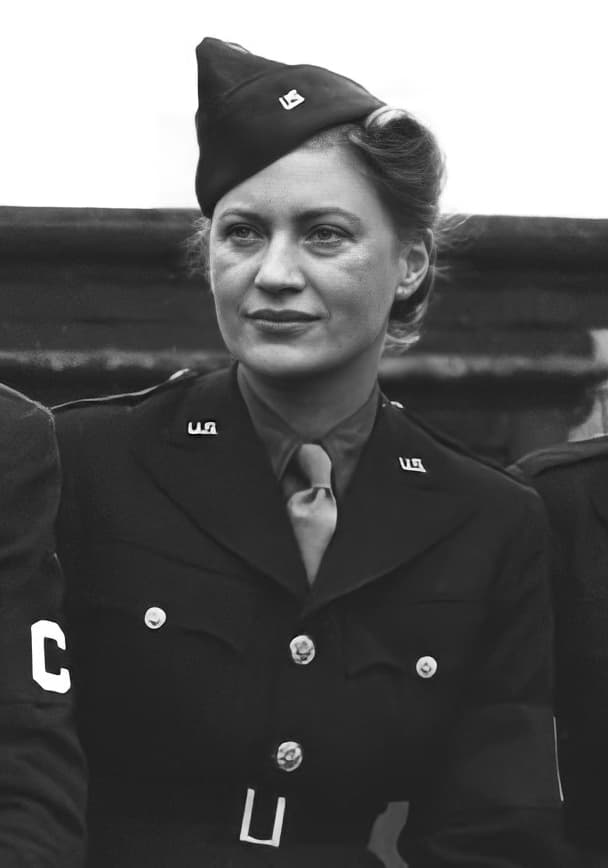
American · Arts · Activism
Lee Miller
April 23, 1907 – July 21, 1977
Early Life and Background
Elizabeth “Lee” Miller was born on 23 April 1907 in Poughkeepsie, New York, into a prosperous middle‑class family.[1][2][6][16] Her father, Theodore Miller, was an engineer and avid amateur photographer, and her mother, Florence, managed the household. From an early age, Lee was introduced to cameras, lenses, and darkroom techniques by her father, who frequently photographed her and taught her the technical basis of photography.[14][17] This early exposure to image‑making would later underpin her extraordinary versatility as both model and photographer.
Miller’s childhood was marked by both privilege and trauma. Several accounts suggest she was sexually abused at a young age and contracted a venereal disease, experiences that contributed to later struggles with depression and alcoholism.[2][14] Growing up in an industrial Hudson River town, she also witnessed the rapid modernization of American life—mass magazines, advertising, and cinema were transforming culture, and these visual forms influenced her sense of the power of images.
As a teenager, Miller studied in the United States and Europe; she spent time in Paris, where she was exposed to French language and culture, and attended schools in New York State.[2][12] Her cosmopolitan upbringing and facility with languages later proved invaluable when she returned to Europe as a photographer and war correspondent.
Career Beginnings: Model and Vogue Cover Star
Miller’s entry into the world of fashion was famously serendipitous. In 1927, while walking in Manhattan, she was nearly hit by a car; Condé Nast, publisher of Vogue, pulled her out of the way and was struck by her appearance.[12] She soon began modeling and that same year appeared on the cover of the first issue of the revived American edition of Vogue, dated 31 March 1927
Throughout the late 1920s, Miller became a sought‑after fashion model, working for magazines such as Vogue, Harper’s Bazaar, and Vanity Fair.[2][14] Her androgynous bob, strong features, and poised presence aligned perfectly with the era’s modernist aesthetic. She posed for prominent photographers including Edward Steichen and George Hoyningen‑Huene, helping shape the visual style of interwar high fashion. However, her modeling career was nearly derailed by a scandal. An advertising image of Miller was used, without her knowledge, to promote sanitary towels; in the 1920s, association with menstrual products was considered deeply inappropriate for a high‑fashion model.[8][12] The incident threatened her employability, but rather than retreat, Miller decided to step behind the camera, seeking greater control over how images—and women—were represented. In 1929, Miller moved to Paris, a decision that marked her transition from model to photographer.[2][6][10] Soon after arriving, she approached the Surrealist artist and photographer Man Ray, insisting that she wished to work as his student rather than merely as a model. The two became collaborators and lovers, and Miller quickly immersed herself in the Surrealist movement.[2][12] Working in Man Ray’s studio, Miller mastered advanced darkroom techniques and experimental processes. She is closely associated with the development and popularization of solarization, a process that partially reverses dark and light values on the photographic negative, producing spectral outlines and uncanny tonal effects.[3][10] Some accounts suggest that Miller discovered solarization accidentally when a mouse in the darkroom startled her into turning on the light; she and Man Ray then explored the effect systematically.[3][10] Although precise credit and chronology remain debated, Miller’s role in this innovation is widely acknowledged. In Paris, Miller also opened her own studio and produced fashion and fine‑art photographs for magazines and private clients.[2][12] Her portraits and nudes often employed sharp angles, dramatic shadows, and Surrealist juxtapositions. She starred in Jean Cocteau’s avant‑garde film Le Sang d’un Poète (The Blood of a Poet, 1930), further cementing her place within the experimental art scene.[2][8] As one of the few women fully recognized inside the Surrealist photographic circle, she challenged the movement’s tendency to cast women primarily as muses. By 1930, Miller had returned to New York, where she co‑ran a photography studio with her brother John “Antoine” Miller.[1][6][12] In this role, she produced fashion, advertising, and portrait work for a growing clientele. Her studio practice demonstrated that she could translate avant‑garde techniques into commercially viable images, maintaining artistic rigor within the constraints of magazine and advertising demands. Miller’s New York photographs display a sophisticated understanding of composition and lighting, reflecting her Paris training. She photographed actors, socialites, and fashion models, often imbuing commercial images with subtle Surrealist inflections. Operating as a studio owner required her to manage business affairs and clients as well as artistic tasks—an unusual position of authority for a woman in the American photographic industry at that time.[12][18] In 1932, Miller married Aziz Eloui Bey, an Egyptian businessman, and relocated to Egypt.[1][6][2] During her years there, she produced striking photographs of desert landscapes, ruins, and urban scenes, blending her Surrealist sensibility with austere modernist composition. She captured mirage‑like horizons, geometric shadows in sand, and isolated figures against vast spaces, expanding her visual vocabulary beyond studio and fashion work.[2] This Egyptian period is sometimes described as a time of partial withdrawal from the European art scene, yet it contributed significantly to her development as an artist. The experience of living in North Africa broadened her cultural perspective and helped shape the formal rigor and psychological intensity that would later characterize her war photography.[3][6] By the mid‑1930s, Miller had returned to Europe, spending time in Paris and London. In 1937, she married Roland Penrose, a British painter, writer, and leading figure in the Surrealist movement, after an earlier relationship with him.[1][6][2] Their home, Farley Farm House in Sussex, became a hub for artists and intellectuals, hosting visitors such as Pablo Picasso, Max Ernst, and Joan Miró.[6][11] Miller continued to photograph during this period, producing portraits of fellow artists and images of Surrealist meetings and exhibitions. Her integration into British Surrealism further cemented her place in the movement’s history, although she was often overshadowed by male colleagues in later accounts.[11][17] The outbreak of World War II on 3 September 1939, when Britain declared war on Germany, transformed Miller’s trajectory.[1][2] Initially, she photographed civil defense preparations, bomb shelters, and wartime London for British and American Vogue. By 1942, she had secured accreditation as a war correspondent and photographer for Vogue, working under the aegis of the U.S. military and Allied commands.[14][18] During the London Blitz, Miller documented bomb damage, rescue operations, and the everyday lives of civilians. Her photographs highlighted women’s roles in factories, the Auxiliary Territorial Service, and other wartime occupations, emphasizing the transformation of gendered labour. She wrote accompanying articles that combined descriptive reportage with sharp commentary on the absurdities and hardships of war.[14][18] From 1944 onward, Miller moved closer to the front. She reported on the Allied campaign following D‑Day (6 June 1944), traveling in the wake of the Normandy landings and photographing devastated towns, field hospitals, and troops.[18] On 25 August 1944, she was in Paris as Allied forces completed the liberation of the city; she photographed jubilant crowds, the reappearance of public life, and meetings with figures such as Picasso.[18] In early 1945, Miller embedded with American forces entering Germany. Her wartime photographs are credited with including the first recorded images of napalm in use, documenting the impact of this new incendiary weapon.[18][19] The exact date of those images is uncertain, but they mark a documentary first in the visual history of modern warfare. On 30 April 1945, Miller traveled with David E. Scherman, a Life magazine photographer, to Dachau concentration camp, arriving shortly after its liberation by U.S. troops.[18] She photographed piles of corpses, emaciated survivors, crematoria, and barracks, creating some of the earliest widely disseminated visual records of Nazi atrocity. The same day, Miller and Scherman entered Adolf Hitler’s apartment in Munich, where Scherman photographed Miller in Hitler’s bathtub, her combat boots—still dirty from Dachau—on the mat next to the tub.[18][20] The image has become emblematic of the collapse of Nazi power and of Miller’s defiant presence as a woman in spaces previously dominated by male authority and violence. Miller’s wartime output for Vogue included both images and text. Her series such as “Nightlife Now” and “Women at War” brought front‑line realities into a women’s fashion magazine, challenging the notion that such publications should confine themselves to domestic or ornamental topics.[14][18] She faced skepticism and sexism from military officials who doubted women’s capacity for combat‑zone work, but her persistence and results secured her a place among the most important photojournalists of the conflict.[12][18] After the war, Miller’s photographic career abruptly slowed. By 1947, she had largely withdrawn from professional photography, turning her attention to domestic life at Farley Farm House and to gourmet cooking
Miller’s retreat from photography has been interpreted as a response to severe wartime trauma and unresolved earlier experiences of abuse. She suffered from depression and alcoholism, conditions that were not widely recognized or treated as such at the time.[2][14] Her wartime images, while praised, also confronted her with memories of violence and atrocity that proved difficult to live with. Despite her withdrawal, Miller’s work did not disappear entirely. Reproductions of her Surrealist and war photographs appeared in books and occasional exhibitions, and she remained a figure within artistic circles through her marriage to Penrose.[11][15] However, she was often described primarily as Man Ray’s muse or Penrose’s wife, rather than as a significant artist in her own right. Miller’s personal life was complex and often tumultuous. Her marriage to Aziz Eloui Bey in 1932 eventually ended; she later formed a long‑term partnership and marriage with Roland Penrose from the later 1930s onward.[1][2][6] The couple had one son, Antony Penrose, born in 1947, who grew up amid the artistic milieu of Farley Farm.[2] Miller had close friendships with artists such as Picasso, who drew and photographed her on multiple occasions, and maintained ties to Surrealist networks across France and Britain.[11][18] At the same time, she struggled with periods of emotional instability, heavy drinking, and what would now be recognized as post‑traumatic stress related to both childhood abuse and wartime experiences.[2][14] Her domestic life at Farley Farm combined hospitality, creativity, and secrecy. Many of her wartime prints and negatives were stored away, and even close friends were not fully aware of the scope of her archive. The farmhouse itself became a living museum of Surrealist art and convivial gatherings, but Miller’s own photographic legacy remained partially hidden. In 1976, Miller was diagnosed with cancer, specifically lung cancer, which would prove terminal.[3][2] She continued to live at Farley Farm House with Penrose, maintaining her culinary and social activities as her health allowed. On 21 July 1977, she died at Farley Farm House near Chiddingly, East Sussex, aged 70.[1][2][3][6][9][16] At the time of her death, Miller was not widely recognized as a major photographer. Much of her work remained in boxes and drawers at Farley, and art historical narratives of Surrealism and war photography largely centered on male figures. The rediscovery of Miller’s work owes much to her son, Antony Penrose. In the 1980s, he began systematically exploring the family archive at Farley Farm House, uncovering thousands of negatives, prints, and documents that revealed the full scope of his mother’s career.[1][6][14] He went on to publish biographies such as The Lives of Lee Miller and to establish the Lee Miller Archives, which has played a central role in organizing exhibitions and lending works to museums.[6][19] From the late 20th century onward, major institutions such as the Victoria and Albert Museum, Tate, the National Galleries of Scotland, and others mounted exhibitions and produced scholarly materials on Miller’s photography.[3][10][11][15] Her images have been incorporated into canonical histories of Surrealism and World War II photojournalism, and she is now widely cited as one of the bravest and most innovative photographers of the 20th century.[13][18] While specific awards and honours are dispersed and often undocumented by exact date, her posthumous recognition includes retrospectives, catalogue raisonnés, and inclusion in major survey shows of women photographers and Surrealist art.[10][11][17] The Lee Miller Archives and associated Farleys House & Gallery continue to act as custodians of her legacy.[6] Lee Miller’s legacy spans several fields: fashion photography, Surrealist art, war photojournalism, and women’s history. As a model, she helped define the look of interwar modernity; as a Surrealist photographer, she contributed technical and aesthetic innovations such as solarization; as a war correspondent, she produced some of the most searing images of World War II, including early documentation of napalm and the liberation of Dachau.[2][3][14][18] Her work expanded the boundaries of what women could do in photography and journalism. She moved repeatedly from roles traditionally assigned to women—muse, model, domestic host—into positions of technical authority and front‑line reportage. In doing so, she confronted institutional sexism, wartime danger, and personal trauma, yet insisted on claiming authorship of her images and texts. Miller’s photographs are valued not only for their historical content but also for their formal qualities. She brought a Surrealist awareness of dream, dislocation, and irony to documentary work, creating images that are both evidentiary and psychologically complex. Her famous bathtub photograph in Hitler’s Munich apartment exemplifies this fusion: a staged yet deeply political image that collapses the distance between private comfort and public horror.[18][20] In recent decades, feminist art historians and curators have highlighted Miller as a key example of how women’s contributions to modernism and war reporting were marginalized and later recovered. Her life story—marked by early success, wartime bravery, postwar withdrawal, and posthumous rediscovery—illustrates broader patterns in women’s history, including the impact of trauma, the importance of archives, and the role of family and institutions in securing historical memory. Miller’s life has inspired multiple biographies, documentaries, and scholarly studies. In the 21st century, she became the subject of renewed popular interest, including the feature film Lee (2023), which dramatizes her experiences as a World War II correspondent.[20][2] While dramatized, such representations have introduced her story to wider audiences and prompted further discussion of her work. Through exhibitions, books, and films, Lee Miller is now firmly established as a central figure in 20th‑century photography. Her images continue to be reproduced and studied, ensuring that the woman once nearly forgotten as a muse is recognized as a pioneering artist, technician, and witness to history.Paris and the Surrealist Circle
Return to New York and Professional Studio Work
Egyptian Interlude and Landscape Photography
Return to Europe, British Surrealism, and Marriage to Roland Penrose
World War II: Vogue War Correspondent and Combat Photographer
Postwar Years, Withdrawal from Photography, and Domestic Reinvention
Personal Life: Relationships, Family, and Mental Health
Later Life, Illness, and Death
Rediscovery, Awards, and Posthumous Recognition
Legacy and Historical Impact
Representation in Popular Culture
Dated achievements
17 indexed.
- Apr231907Arts
Birth of Elizabeth "Lee" Miller in Poughkeepsie, New York
Elizabeth “Lee” Miller is born in Poughkeepsie, New York, on 23 April 1907, beginning the life of a future model, Surrealist photographer, and war correspondent.
View details Encyclopedia Britannica – Lee Miller - Mar311927Arts
First American Vogue cover appearance launches Miller’s modeling career
Lee Miller appears on the cover of the revived American Vogue on 31 March 1927, a career-launching image that helps define late‑1920s fashion photography.