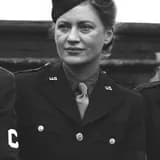
On 21 July 1977, Lee Miller dies of cancer at Farley Farm House in East Sussex, closing the life of a model, Surrealist photographer, and war correspondent.
On 21 July 1977, Lee Miller died of cancer at Farley Farm House, near Chiddingly, East Sussex, England, aged 70. The farmhouse she shared with Roland Penrose had long been a gathering place for artists, writers, and intellectuals, and it was there that her vast photographic archive remained largely unseen at the time of her death.
Miller’s passing marked the end of a life that had traversed multiple identities: fashion model, Surrealist muse, studio photographer, war correspondent, and gourmet cook. For years afterward, she was remembered mainly as a secondary figure attached to more famous men, rather than as a major photographer in her own right. However, the discovery and cataloguing of her negatives, prints, and writings by her son Antony Penrose in the 1980s and 1990s began to reverse that narrative.
Historically, the date of 21 July 1977 is important as a temporal boundary that separates Miller’s lived experience from the period of posthumous reassessment and canonization. Farley Farm House has since become a site of memory, with the Lee Miller Archives headquartered there, contributing to exhibitions, books, and scholarly work. For women’s history, her death underscores the extent to which crucial documentation of women’s contributions can remain dormant until actively recovered, and how familial and institutional efforts are essential to securing their place in the historical record.