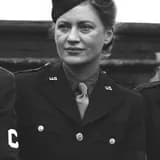
By 1 November 1942, Lee Miller is working as a war correspondent and photographer for Vogue, documenting wartime Britain and later Europe.
By 1 November 1942, Lee Miller had begun working as an accredited war correspondent and photographer for Vogue, a role that transformed both her career and the magazine’s visual culture. From Britain first and later continental Europe, she documented civil defense, women’s wartime labour, bomb damage, and the lives of soldiers and civilians.
Miller’s wartime assignments required her to navigate military bureaucracy, censorship, and physical danger, embedding with Allied units and traveling to front‑line and recently liberated areas. Her images of the London Blitz and British preparations for invasion conveyed the gravity of war to a readership accustomed to fashion and society pages. At the same time, her accompanying texts interrogated the gendered dimensions of conflict, highlighting women’s contributions beyond conventional domestic roles.
Historically, Miller’s work for Vogue in 1942–45 is significant because it helped establish women’s war photography as a serious journalistic practice. She brought a Surrealist eye to documentary tasks, creating pictures that were both evidentiary and psychologically acute. Her presence in a major women’s magazine also meant that female readers encountered the realities of war directly through another woman’s lens and voice, subtly challenging assumptions about what topics and experiences belonged in women’s media.