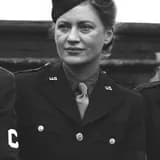
In 1945, Lee Miller’s wartime photographs include the first recorded images of napalm use, documenting a new and devastating incendiary weapon.
In 1945, recorded here as 1 January 1945 to indicate year‑level precision, Lee Miller produced wartime photographs that include what historians have identified as the first recorded use of napalm. Her images show the devastating effects of this new incendiary weapon, capturing burned landscapes and structures in Europe as Allied forces employed advanced ordnance against German targets.
Although Miller did not invent napalm and was not the first to use it, her photographs are recognized as the earliest visual documentation of its deployment to reach broad public and historical attention. In a conflict already marked by aerial bombing and mechanized slaughter, napalm represented a further escalation in the capacity to inflict wide‑area fire damage. Miller’s images, published in the context of war reportage, provided evidence of this technological shift and raised implicit questions about the ethics of such weapons.
Historically, these photographs are significant as a documentary first, marking the intersection of military innovation and visual testimony. For women’s and media history, they illustrate how a female war correspondent was positioned at the cutting edge of warfare, recording transformations whose consequences would extend into later conflicts in Asia and elsewhere. The fact that the earliest known napalm images were made by a woman also challenges assumptions about who witnesses and narrates military technology.