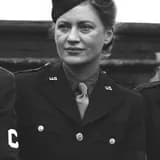
From 1947 onward, Lee Miller’s wartime and Surrealist photography begins to attract postwar recognition, though full appreciation will come decades later.
From 1947, recorded as 1 January 1947 for year‑level accuracy, Lee Miller began to receive postwar recognition for her extensive body of wartime and Surrealist photography. While she herself retreated from professional photography into domestic life and gourmet cooking at Farley Farm House, exhibitions, publications, and the preservation work of friends and colleagues slowly drew attention to her achievements.
Early recognition took the form of reproductions of her war images in books and magazines, mentions in critical writings on Surrealism, and inclusion in group shows of modern photography. However, Miller’s reputation remained overshadowed by that of male contemporaries and by her role as muse to Man Ray and partner to Roland Penrose. Only decades later, particularly through the efforts of her son Antony Penrose, would the full scope of her work be catalogued and celebrated.
Historically, the post‑1947 recognition process is significant because it illustrates the delayed and uneven acknowledgment many women artists receive. Miller’s photographs were influential in shaping visual understandings of World War II, yet her authorship was not consistently foregrounded. The gradual emergence of her name in art historical discourse contributed to broader reassessments of women’s roles in modernist movements and photojournalism.