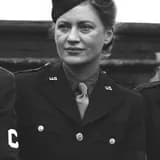
By early 1937, Lee Miller marries British Surrealist Roland Penrose, integrating into key UK avant‑garde circles and establishing a base at Farley Farm House.
By 1937, recorded here as 1 January 1937, Lee Miller had married Roland Penrose, a British painter, writer, and key figure in the Surrealist movement. Their relationship, forged through shared artistic networks in Paris and London, anchored Miller within the British avant‑garde and provided a stable base in the UK on the eve of World War II.
Marriage to Penrose connected Miller to an influential circle that included Pablo Picasso, Max Ernst, and other leading modernists. At Farley Farm House in Sussex, which became their home, she hosted and photographed many of these artists, creating an informal archive of Surrealist domestic life. Penrose’s support also facilitated exhibitions and publications that, in later decades, would help reassert Miller’s place in art history.
Historically, this marriage matters not simply as a personal event but as an institutional linkage: it positioned Miller at the crossroads of British art, wartime culture, and postwar memory. The couple’s son, Antony Penrose, later played a decisive role in uncovering and preserving Miller’s photographic legacy, making the Penrose family a conduit through which her work entered museums and scholarship. In the context of women’s history, the marriage shows how Miller navigated partnership with a prominent male artist while insisting on an independent professional identity as photographer and war correspondent.