← All women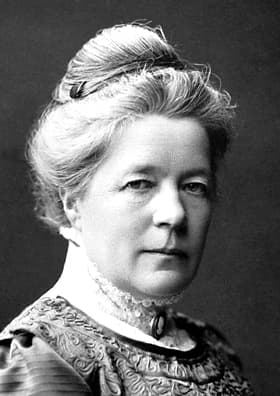
Swedish · Literature · Arts
Selma Lagerlöf
November 20, 1858 – March 16, 1940
Early Life and Background
Selma Ottilia Lovisa Lagerlöf was born on 20 November 1858 at the modest manor house Mårbacka in Värmland, central Sweden.[1][3][13] She was the fourth of five children of Erik Gustav Lagerlöf, a former army officer and estate owner, and Lovisa (Louise) Wallroth
Lagerlöf suffered a hip ailment in childhood, which limited her physical activity and contributed to a somewhat secluded upbringing.[1] She spent considerable time reading, listening to family stories, and absorbing local legends recounted by servants and relatives. These formative experiences nurtured her fascination with folklore and the oral storytelling tradition of Värmland, elements that would become defining features of her narrative style.[1][7] Although girls’ educational opportunities in nineteenth‑century Sweden were constrained, her parents valued learning, and she received instruction beyond basic schooling. Her mother’s support and encouragement were particularly important in sustaining her ambition to become a writer at a time when female authors were rare and often marginalized.[13] The social milieu of a provincial, Lutheran household, with its emphasis on morality, duty, and community, shaped the ethical dimensions of her later work. In the late 1870s and early 1880s, Lagerlöf pursued teacher training, one of the few professional paths open to middle‑class women.[1][13] She enrolled at the Royal Women’s Superior Training College (Högre Lärarinneseminariet) in Stockholm, where she studied from 1882 to 1885 and qualified as a teacher.[13] The move from rural Värmland to the capital exposed her to new intellectual influences, including contemporary literature and discussions about women’s rights. After completing her studies, she began working as a teacher, initially in smaller towns and later at a girls’ school in Landskrona
During this period, Lagerlöf began publishing shorter pieces and entering literary competitions. In 1890, she won first prize in a contest organized by the magazine Idun for her story "Herr Arnes pengar" (Sir Arne's Treasure), a narrative rooted in Swedish history and legend.[1][7] This success brought her to the attention of the literary community and convinced her that a full‑time writing career might be possible. Lagerlöf’s major breakthrough came with the publication of her debut novel Gösta Berlings saga (The Story of Gösta Berling) in 1891
Initial critical reception was mixed, but influential figures, including the critic and writer Georg Brandes, recognized its originality.[1] Over time, the novel became widely celebrated and is now considered a classic of Swedish literature. Lagerlöf’s ability to integrate regional settings with universal themes of sin, redemption, and community established her as a pioneering modern author.[5][19] Following Gösta Berlings saga, she published several collections and novels that reinforced her reputation. Works such as Osynliga länkar (Invisible Links, 1894) and Antikrists mirakler (The Miracles of Antichrist, 1897) explored moral conflicts, social injustice, and religious themes, often using symbolic and supernatural motifs.[1][7] These texts illustrated her ability to merge narrative experimentation with ethical reflection. Her growing success allowed her to leave teaching. By 1895, she had moved to Falun and began supporting herself solely through writing.[5] This transition from teacher to full‑time author marked a significant personal and professional milestone, particularly for a woman in fin‑de‑siècle Sweden. In the early twentieth century, Lagerlöf produced some of her most acclaimed works. The novel Jerusalem, published in two parts in 1901–1902, depicts Swedish peasants who join a religious sect and emigrate to Palestine.[1][3] Drawing on reports of actual emigration movements and religious communities, the book combines social realism with spiritual inquiry, examining faith, sacrifice, and the consequences of fanaticism. It further solidified her international standing and was translated into multiple languages.[3] One of her most influential projects emerged from a commission rather than a traditional literary plan. In 1906–1907, the National Teachers’ Association and educational authorities asked Lagerlöf to write a geography reader for Swedish schoolchildren.[1][4] The result was Nils Holgerssons underbara resa genom Sverige (The Wonderful Adventures of Nils), published in two volumes between 1906 and 1907.[1][5] The book follows a mischievous boy, Nils Holgersson, who is transformed to miniature size and travels across Sweden on the back of a goose. It combines accurate geographical information with folklore, animal stories, and moral lessons. Designed as a textbook, it became one of Sweden’s most beloved literary works, widely read outside school settings and translated into numerous languages.[5][12] Its success demonstrated Lagerlöf’s ability to integrate educational aims with imaginative storytelling, making complex information accessible and engaging for children. Throughout this period, she continued to publish novels and stories that explored themes of love, duty, poverty, and redemption. Works such as Herr Arnes penningar (novel version), Kejsarn av Portugallien (The Emperor of Portugalia, 1914), and later collections further extended her contribution to modern narrative fiction.[1][15] Lagerlöf’s literary achievements brought her a succession of honors. In 1904, she received the Swedish Academy’s large gold medal (Stora guldmedaljen), recognizing the significance of her early works and her impact on Swedish prose.[16] This award from the body that oversaw national literary standards signaled that her innovative style had become part of the country’s cultural canon. She was further distinguished in 1907 with an honorary doctorate in philosophy from Uppsala University, one of Sweden’s oldest and most prestigious institutions.[20][16] The degree marked an important moment in the recognition of a woman writer whose path had not followed traditional academic routes, and it underscored the intellectual value attributed to her fiction and essays. The pinnacle of her recognition came in 1909 when the Swedish Academy selected her for the Nobel Prize in Literature.[1][3][5] The prize was announced on 11 November 190910 December 1909first woman and the first Swedish writer to win the literature Nobel.[3][19] The prize motivation praised "the lofty idealism, vivid imagination and spiritual perception" of her writings, confirming her international status as a major author.[5] In the same year, Lagerlöf was awarded the Swedish royal medal Litteris et Artibus, honoring her contributions to culture.[1] Her accolades continued in later decades. In 1914, she was elected to the Swedish Academy, becoming its first female member since its founding in the eighteenth century.[1][6] This institutional milestone underscored her role in reshaping the gender dynamics of cultural governance. In 1926, she received the Swedish Illis quorum medal, one of the nation’s highest civilian distinctions, for her services to Swedish culture.[1] Two years later, in 1928, the University of Greifswald in Germany awarded her an honorary doctorate, reflecting her standing in European literary circles.[6] Collectively, these honors affirm the breadth of her recognition—from national to international, from royal and governmental bodies to universities and academies. Lagerlöf’s personal life was marked by strong family attachments and enduring friendships rather than marriage or children. She never married and had no children, a choice that diverged from conventional expectations for middle‑class women of her generation.[13] Her decision allowed her to devote herself fully to writing and public work, though it also exposed her to societal scrutiny. She maintained close ties to her siblings and worked to regain and preserve the family estate Mårbacka after financial difficulties forced her father to sell it.[4][13] Using income from her books and awards, she repurchased and restored Mårbacka, eventually transforming it into a symbol of her life and work. Historically significant are her deep friendships with women, including the writer Sophie ElkanValborg Olander
Beyond intimate circles, Lagerlöf engaged in broader social and political conversations, particularly around women’s rights and the responsibilities of writers to address moral and civic issues. She supported causes related to education and social welfare and was respected for her integrity and sense of duty.[12][13] Lagerlöf’s public role extended beyond literature. During World War I and the turbulent decades that followed, she used her influence to support humanitarian efforts. In the 1910s she aided refugees and victims of the war, though many of these activities are documented without precise dates.[16] In the 1930s, as Nazi persecution escalated in Germany and elsewhere, Lagerlöf responded by providing financial assistance to refugees and persecuted individuals. According to biographical accounts, she even sold parts of her Nobel Prize medal and other valuables to raise funds for those fleeing the regime.[16][11] These actions illustrate her deep moral concerns and her belief that acclaimed authors bore responsibilities beyond artistic production. Within Sweden, she supported cultural and educational initiatives and lent her voice to discussions about women’s rights. While she was not at the forefront of organized suffrage campaigns, she endorsed the broader movement for women’s equality and used her prominence to legitimize women’s participation in public life.[12][13] Her reputation as a writer of moral fiction, concerned with justice and compassion, resonated with her practical humanitarian commitments. Selma Lagerlöf’s legacy is multifaceted, spanning literary innovation, gender breakthroughs, and national cultural identity. Her narrative style—combining folk tales, regional history, and moral allegory with a distinctive lyrical prose—created a new model for modern storytelling in Sweden.[1][5] She demonstrated that serious literature could draw heavily on local traditions and fantastical elements without sacrificing psychological depth or ethical complexity. As the first woman Nobel laureate in Literature and the first female member of the Swedish Academy, Lagerlöf opened doors for women in institutions that had long excluded them.[3][6][19] Her recognition challenged entrenched assumptions about women’s intellectual capacity and artistic authority, providing an example that inspired later generations of women writers and scholars. Her works, particularly Gösta Berlings saga, Jerusalem, and Nils Holgerssons underbara resa genom Sverige, remain central to the Swedish literary canon and are widely read internationally.[1][5][12] Nils Holgersson in particular has had enduring impact on Swedish education and popular culture, shaping how generations of children imagined their country’s geography and wildlife. Mårbacka, the estate where she was born and died, has been preserved as a museum and memorial site, housing manuscripts, correspondence, and personal artifacts.[4] It symbolizes her deep connection to place and functions as a locus for understanding her life and art. Scholarly studies continue to explore her narrative techniques, representations of women, and engagement with questions of faith, nationalism, and social justice. In broader cultural history, Lagerlöf is recognized as an early figure in the magical realist tradition and as a writer who anticipated later twentieth‑century explorations of the blurred boundaries between myth and reality. Her blending of everyday life with supernatural elements influenced not only Scandinavian literature but also international perceptions of Nordic storytelling. In her later years, Lagerlöf divided her time between Mårbacka and public engagements in Sweden and abroad. She continued to write and publish, though at a slower pace, and remained active in the Swedish Academy.[1][6] Her status as a national figure meant that her opinions on cultural and social matters carried considerable weight. As political tensions mounted in Europe in the 1930s, she grew increasingly concerned about the rise of totalitarianism and the persecution of minorities. Her humanitarian actions during this time, including financial support for refugees, reflected both her moral convictions and her belief in the social responsibilities of artists.[16][11] On 16 March 1940, Selma Lagerlöf died at Mårbacka at the age of 81.[1][2][3][5][13] She had suffered a stroke, and her death occurred just months into World War II. Swedish and international press immediately commemorated her as one of the great authors of her era and as a pioneer for women in literature. Following her death, Mårbacka was developed as a heritage site, and her works continued to be reprinted, translated, and adapted for film, television, and theatre.[15] Modern biographies and scholarly studies have further illuminated her life, including her personal relationships and political engagements. She remains a central figure in women’s history, recognized for having turned the imaginative resources of a rural childhood into literature of global significance and for having broken institutional barriers that had long constrained women’s participation in cultural life.Education and Early Career
Breakthrough: Gösta Berlings Saga and Early Works
Major Novels and The Wonderful Adventures of Nils
Awards, Honours, and International Recognition
Personal Life and Relationships
Social Engagement and Humanitarian Work
Legacy and Historical Impact
Later Life and Death
Dated achievements
10 indexed.
- Nov201858Literature
Birth of Selma Lagerlöf at Mårbacka
Selma Lagerlöf was born on 20 November 1858 at the family estate Mårbacka in Värmland County, Sweden.
View details Encyclopedia Britannica – Selma Lagerlöf - Jan011904Literature
Swedish Academy large gold medal awarded
In 1904, Selma Lagerlöf received the Swedish Academy’s large gold medal, honoring her growing influence in Swedish literature.