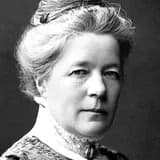
Selma Lagerlöf died on 16 March 1940 at her home Mårbacka in Värmland County, Sweden, aged 81.
On 16 March 1940, Selma Lagerlöf died at Mårbacka, her lifelong home in Värmland County, Sweden, at the age of 81. Having spent her final years back at the estate she had struggled to reclaim and preserve, she passed away after a stroke, closing a life that had transformed Swedish and world literature.
Lagerlöf’s death occurred against the backdrop of World War II, a conflict that deeply troubled her. In the preceding decade she had sold parts of her Nobel medal and other valuables to aid refugees fleeing Nazi persecution, especially in Germany, reflecting her humanitarian commitments and political awareness. Her passing marked the loss of a moral and cultural voice that had spoken for compassion, social responsibility, and respect for the marginalized.
The significance of her death lies not only in the end of a remarkable career but also in the immediate recognition of her as a national icon. Obituaries and commemorations in Sweden and abroad hailed her as one of the country’s greatest authors and a pioneer for women in literature. Mårbacka became a memorial site and museum, preserving her manuscripts, correspondence, and the physical environment that inspired many of her stories. For women’s and literary history, 16 March 1940 marks the conclusion of a life that opened the Nobel institution and the Swedish Academy to women, expanded the imaginative possibilities of the novel, and demonstrated how a woman writer from rural origins could shape international cultural discourse.