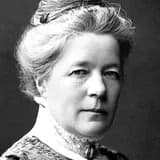
In 1907, Uppsala University awarded Selma Lagerlöf an honorary doctorate in philosophy, recognizing her literary achievements.
In 1907, Uppsala University conferred an honorary doctorate in philosophy on Selma Lagerlöf, formally recognizing her as a major intellectual and literary figure. Although the precise day of the ceremony is not clearly documented, the degree marked a significant moment when one of Sweden’s oldest universities honored a woman writer whose path had not followed traditional academic routes.
Lagerlöf had trained as a teacher at the Royal Women’s Superior Training College in Stockholm, not as a university scholar, and spent years working in a girls’ school in Landskrona. Awarding her an honorary doctorate signaled that lived literary achievement could stand alongside formal scholarship. At a time when women’s access to universities was still contested and female academics rare, this recognition granted her symbolic entry into the highest ranks of Swedish intellectual life.
The honorary doctorate strengthened Lagerlöf’s authority beyond the realm of popular fiction. It enhanced her visibility in cultural debates and contributed to the growing respect that later supported her Nobel Prize and election to the Swedish Academy. More broadly, it demonstrated that universities could honor women’s creative work as intellectually significant, thereby challenging narrow definitions of academic merit. For future generations of women writers and scholars, Lagerlöf’s 1907 honor served as an example of how literary excellence could open doors to recognition in elite academic institutions.