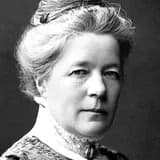
In 1926, Selma Lagerlöf received the Swedish Illis quorum medal, one of the nation’s highest civilian honors.
In 1926, Selma Lagerlöf was awarded the Swedish distinction Illis quorum, one of the country’s highest civilian honors. The decoration, formally named Illis quorum meruere labores (“for those whose labors have deserved it”), is bestowed by the government to individuals who have rendered exceptional services to the nation. Although a precise day of conferment is not clearly attested in accessible sources, the 1926 award recognized her long‑standing contributions to Swedish literature and public life.
By this time, Lagerlöf had been a Nobel laureate for nearly two decades and a member of the Swedish Academy for over ten years. Her writings, including Nils Holgerssons underbara resa genom Sverige and Jerusalem, were widely read and had helped shape Swedish cultural identity. Illis quorum acknowledged not just artistic merit, but her broader impact on Sweden’s image at home and abroad, as well as her engagement in social and humanitarian causes.
For a woman to receive Illis quorum in the 1920s was still unusual. The honor underlined the possibility that women’s intellectual and civic contributions could be recognized at the highest national level, beyond the sphere of private charity or informal influence. Lagerlöf’s 1926 distinction thus stands as an important milestone in the official recognition of women’s public achievements, illustrating how literary work and moral engagement could be seen as vital services to the nation.