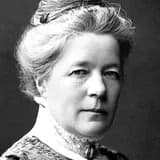
In 1904, Selma Lagerlöf received the Swedish Academy’s large gold medal, honoring her growing influence in Swedish literature.
In 1904, Selma Lagerlöf received the Swedish Academy’s large gold medal (Stora guldmedaljen), one of the institution’s highest distinctions for literary achievement. While the exact day of conferment is not readily documented in accessible sources, the medal formally acknowledged the impact of her early works, including Gösta Berlings saga and subsequent novels that had already reshaped Swedish prose.
At the turn of the twentieth century, the Swedish Academy played a central role in defining national literary standards. For a woman author to be honored with its large gold medal was highly unusual, given that literary institutions were overwhelmingly male and often skeptical of women’s writing. The award signaled institutional recognition of Lagerlöf’s imaginative style, which blended folklore, regional history, and moral reflection, and validated her position within the canon of Swedish literature.
This medal also foreshadowed Lagerlöf’s later global acclaim. It strengthened her prestige in Sweden, contributed to her financial stability, and helped consolidate the case for her Nobel Prize in Literature five years later. In the gendered context of early twentieth‑century Europe, where women struggled for access to higher education and professional status, the Academy’s honor demonstrated that a woman could be celebrated not only as a popular novelist but as a leading national author. The 1904 gold medal thus stands as an important step in the institutional recognition of women’s literary contributions.