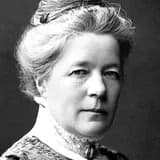
In 1909, Selma Lagerlöf received the Swedish royal medal Litteris et Artibus for outstanding contributions to culture.
In 1909, the same year she was named Nobel laureate, Selma Lagerlöf was awarded the Swedish royal medal Litteris et Artibus. This decoration, instituted in the nineteenth century, is conferred by the monarch to individuals who have made outstanding contributions to culture, particularly in the arts and literature. Although the exact date of the presentation is not documented in commonly available sources, the award further cemented her status as a central figure in Swedish cultural life.
Receiving Litteris et Artibus placed Lagerlöf among a select group of artists and writers recognized at the highest level by the Swedish crown. For a woman author to receive such an honor in 1909 was notable: cultural and academic distinctions remained largely reserved for men, and official recognition of women’s creative work was still relatively rare. The medal acknowledged the national importance of her novels and stories, many of which explored Swedish landscapes, folklore, and moral themes.
The award reinforced the idea that Lagerlöf’s writings were not only popular or commercially successful but integral to Sweden’s cultural heritage. Coming in the same year as the Nobel Prize, the royal medal contributed to a wider pattern of institutional validation that elevated her from acclaimed writer to cultural icon. For women in the arts, her recognition with Litteris et Artibus illustrated that female creativity could be honored by both international and national institutions, signalling a shift in attitudes toward women’s roles in cultural production.