← All women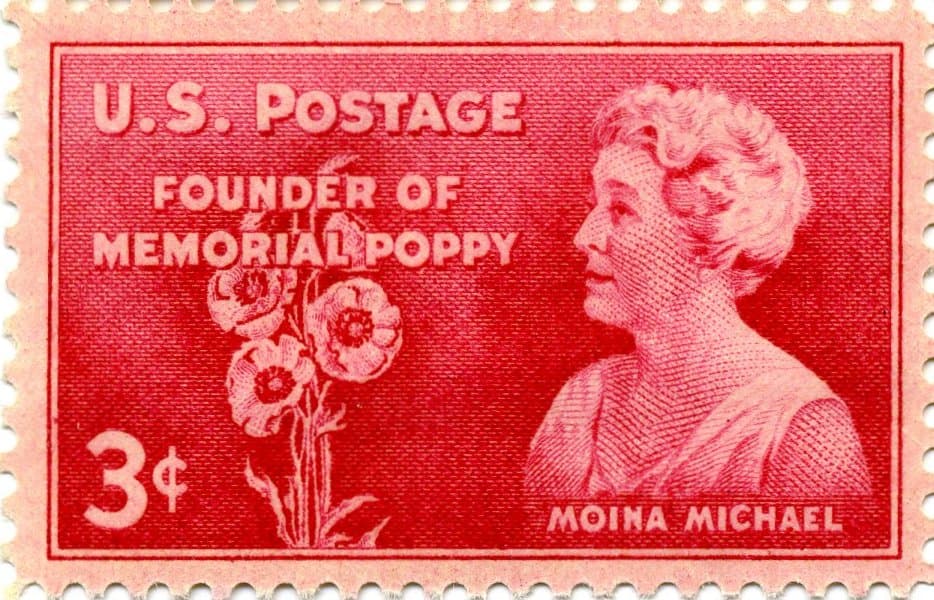
American · Activism · Literature
Moina Michael
August 15, 1869 – May 10, 1944
Early Life and Background
Moina Belle Michael was born on August 15, 1869, near Good Hope in Walton County, Georgia, in the post–Civil War American South.[4] Growing up in a rural community during Reconstruction, she experienced first-hand the region’s economic hardship and the social upheaval that followed the conflict. This environment helped nurture a deep sensitivity to sacrifice, poverty, and the needs of vulnerable populations, themes that would later underpin her humanitarian work.
Biographical sketches describe Michael as part of a family that valued education despite limited resources.[2][13] As a young woman, she pursued teacher training and normal-school education at a time when opportunities for women in higher education were still constrained. Her early commitment to schooling and rural instruction aligned with progressive-era efforts to improve literacy and schooling in the South.
Later accounts, including Georgia Women of Achievement and World War I centennial narratives, note that she became an educator of considerable experience, teaching in public schools and normal schools across Georgia and other states before her long association with the University of Georgia.[2][4][13] These formative teaching years gave her insight into social reform, community leadership, and the power of symbols and stories to shape public attitudes.
Career Beginnings and Development
By the 1890s, Michael had embarked on a teaching career that would span more than three decades.[2] She taught in both rural and urban settings, working to improve educational opportunities particularly for children in under-resourced communities. Her work involved teacher training and participation in normal schools, which were designed to professionalize teaching and extend modern pedagogical methods across the South.[2][4]
Michael’s reputation grew as she engaged with educational reforms and rural extension efforts. Eventually she was associated with the University of Georgia, where she taught and worked with teacher-training programs.[2][13] Her role blended classroom instruction with outreach, placing her at the intersection of education and community service in the early 20th century.
By the time World War I began in 1914, Michael was an experienced educator in her late forties. The war and the United States’ entry in 1917 created new opportunities for civilian support work. In 1918 she volunteered as a YMCA Overseas War Worker (War Secretary), serving in New York City rather than overseas.[8][13][16] This role brought her into daily contact with soldiers and support staff, and into an environment saturated with news of casualties and battlefield experiences.
Inspiration from "In Flanders Fields" and the Birth of the Poppy Idea
Michael’s turning point came in November 1918. While working at the YMCA Overseas War Workers’ headquarters in New York, she encountered Canadian physician and soldier John McCrae’s poem "In Flanders Fields", which describes red poppies growing among soldiers’ graves in Belgium.[3][8][13] Multiple accounts emphasize how profoundly she was moved by the poem’s imagery and its plea to the living not to break faith with the dead.[3][5][16]
On November 9, 1918, Michael wrote her own response poem, "We Shall Keep the Faith", in which she pledged to remember the fallen and symbolically "keep the faith" by adopting the red poppy as an emblem.[11][13][17] On the same day, she resolved to always wear a red poppy in remembrance of those who served in World War I.[13][17] This personal vow is widely credited as the moment she conceived the Flanders Fields Memorial Poppy as a formal remembrance symbol.[4][13]
That day she also placed red silk poppies on the front desk at the YMCA and distributed them to visiting soldiers and staff, inviting them to wear the flowers in memory of the dead.[1][13] She later recalled that when people gave her money to buy more poppies, she had effectively made the first sale of the memorial poppy.[1][13] These acts transformed a literary image into a tangible emblem and initiated a new way for civilians to participate in commemoration.
Launching the Memorial Poppy Campaign
After November 1918, Michael began a systematic campaign to promote the poppy as a remembrance symbol and fundraising tool. She wrote letters to public officials, including a letter to her congressman in December 1918 urging adoption of the red poppy as a national symbol of remembrance.[9] She also contacted veterans’ organizations, women’s groups, and civic associations, arguing that poppy wearing could honor the fallen while raising funds for disabled veterans.
According to Georgia Women of Achievement, her persistent efforts led to the emblem’s launch by March 1919, when the poppy began to be recognized more broadly as a memorial emblem.[4][7] This marked the transition from private initiative to organized movement. During this period, Michael reportedly obtained a U.S. patent in March 1919 related to her poppy work, a detail mentioned in auxiliary histories as formal recognition of her emblem concept and its production, though surviving secondary sources do not give the patent number.[1]
Following World War I, Michael returned to the University of Georgia, where she taught classes that included disabled servicemen.[2][13] Observing their needs, she refined the idea of selling silk poppies to raise money for disabled and needy veterans.[3][4] This innovation linked symbolic wearing with practical relief: poppies were both a visible sign of remembrance and a mechanism for channeling funds to those whose lives had been disrupted by war.
Adoption by Veterans’ Organizations and International Spread
Michael’s advocacy helped bring the poppy idea to the attention of the American Legion, founded in 1919 as a national veterans’ organization. Postal-museum and stamp-history sources describe how she promoted the symbol to national organizations and how the Legion eventually embraced it.[8]
At the Legion’s 1920 national convention, held September 27–29, the organization adopted the red poppy as its official national symbol of remembrance for those who served in World War I.[8] This decision, commonly associated with September 27 in summaries of convention actions, institutionalized Michael’s emblem within a powerful male-dominated veterans’ body and gave the poppy nationwide visibility.
In 1921, the American Legion Auxiliary—the Legion’s women’s organization—adopted the poppy as its memorial flower.[10][15] The Auxiliary organized volunteers to make and distribute silk poppies, often employing disabled veterans in their manufacture.[8][10] This women-led structure turned Michael’s idea into a recurring national program. In 1924, the Auxiliary formalized poppy distribution, establishing standardized procedures that embedded poppy drives into annual commemorative calendars.[10]
Michael’s influence extended beyond the United States. Through contemporaries such as French-born campaigner Anna Guérin, the poppy idea spread to England, France, Australia, and more than fifty other countries.[8][9][17] In 1921, Earl Haig’s British Legion Appeal Fund, later the Royal British Legion, adopted the poppy as a symbol of remembrance for veterans in Britain.[10][15] Poppy appeals became major fundraising events associated with Armistice Day (later Remembrance Day) in the Commonwealth and with Memorial Day and Veterans Day in the United States.
Major Works and Writings
Although best known for her activism, Michael also contributed to literature. Her poem "We Shall Keep the Faith", written on November 9, 1918, has been widely reprinted in histories of World War I remembrance and in educational materials about the poppy tradition.[11][17] The poem is both a personal vow and a public exhortation, reinforcing the moral imperative behind the poppy symbol.
In 1941, Michael published her autobiography, "The Miracle Flower: The Story of the Flanders Fields Memorial Poppy".[15] In this book she chronicled her childhood, teaching career, wartime service, and long struggle to secure official recognition of the poppy. The autobiography provides first-hand detail about her interactions with organizations, the obstacles she faced, and her view of the poppy as a "miracle flower" that transformed grief into caring action.
These writings have ensured that Michael’s voice remains part of the historical record, illuminating the motivations, religious faith, and sense of obligation that drove her advocacy. They have also served as source material for later biographers, children’s authors, and educators seeking to convey the story of "The Poppy Lady" to new generations.[18]
Awards, Honors, and Recognition
During her lifetime, Michael received numerous awards and honors for her humanitarian efforts, particularly from veterans’ organizations and civic groups.[15] While specific award lists vary in detail, accounts agree that she was celebrated as the "Poppy Lady" and recognized for her tireless campaigning on behalf of veterans.
Her most prominent posthumous honor came on November 9, 1948, when the U.S. Post Office Department issued a 3-cent commemorative stamp featuring her portrait and red poppies.[8] The National Postal Museum notes that she was "the person most responsible for establishing the symbol of the red poppy as a memorial to those who served in WW I" and that the stamp acknowledged this contribution.[8] Later philatelic exhibits highlighting "Women on Stamps" include Michael as a key figure among professionals and philanthropists who enhanced lives.[20]
Michael has also been honored in Georgia. The Georgia Historical Society erected a marker titled "The Poppy Lady," near her birthplace, noting her birth "near here August 15, 1869" and summarizing her role in popularizing the poppy.[4] Her hometown region has hosted a Poppy Festival in her memory, celebrating her legacy as a local woman whose idea gained global reach.[5]
In 1999, Michael was inducted into Georgia Women of Achievement, an honor that recognizes women who made enduring contributions to the state and beyond.[4][11] This induction underscores her dual identity as both educator and humanitarian, credited with transforming the red poppy into a universal symbol of tribute to fallen and surviving veterans of World War I.
Personal Life
Biographical sources focus primarily on Michael’s professional and humanitarian work and provide comparatively little detail about her private life. There is no strong evidence that she married or had children, and many accounts implicitly present her as a single woman whose primary commitments were to education and service.[2][13] This absence itself reflects historical patterns: women who devoted themselves to public reform work in the early 20th century were often unmarried or kept personal relationships outside the public record.
Her life was deeply shaped by religious faith and a sense of moral obligation. In her writings and the recollections of relatives, she is portrayed as devout and as someone who interpreted the poppy as a sign not only of remembrance but also of Christian duty to care for the wounded and bereaved.[3][12] Her extended family, including descendants such as her great-nephew Tom Michael, have remained custodians of her story, speaking about the scale of funds raised and the continuing relevance of her work.[3]
Legacy and Historical Impact
Michael’s legacy is exceptionally broad for a figure whose principal innovation was symbolic rather than legislative. During her lifetime, the sale of poppy flowers generated enormous sums for veterans’ relief. Georgia Women of Achievement and World War I centennial organizations estimate that by 1944, approximately $200 million had been raised in the United States and England through poppy sales for veterans’ causes.[4][12] Adjusted for inflation and expanded to worldwide campaigns, her great-nephew has suggested that poppy sales have generated the equivalent of billions of dollars to support veterans and their families.[3]
Her work helped create what historians describe as a new culture of remembrance. Before the poppy campaigns, commemoration of war dead often centered on monuments, parades, and official ceremonies. Michael’s idea gave individuals a simple, affordable way to visually signal remembrance by wearing a flower.[2][5] At the same time, it linked remembrance to tangible support: buying a poppy was not only symbolic but also a direct contribution to relief funds.
Internationally, the poppy has become a global emblem associated with Armistice Day, Remembrance Day, and other observances honoring those killed and injured in conflict. Countries across the Commonwealth and beyond distribute millions of poppies each year. These practices trace directly back to Michael’s 1918 decision and subsequent campaigning, as well as to the collaborative efforts of advocates like Anna Guérin.[8][9][10]
Michael’s story has also become a tool for education about women’s roles in wartime and philanthropy. Children’s books such as "The Poppy Lady: Moina Belle Michael and Her Tribute to Veterans" and related curricula bring her narrative to younger audiences, emphasizing how one woman’s determination can change public customs.[18] Blogs, museum exhibits, and online features continue to highlight her as a model of civic responsibility and creative activism.[6][16]
Later Life and Death
In her later years, Michael remained active in teaching and advocacy. She retired from her position at the University of Georgia in 1934, having spent decades in the classroom and in teacher training.[15] Even after retirement, she continued to speak and write about the poppy movement, encouraging the expansion of memorial and fundraising programs.
Her autobiography, "The Miracle Flower", published in 1941, served as a capstone to her public work, documenting the development of the memorial poppy from its origins in the YMCA office to its international spread.[15] By this time, poppy appeals were firmly established in multiple countries, and Michael could see the magnitude of the charitable impact her idea had generated.
On May 10, 1944, Michael died in Georgia.[4][13] She passed away during World War II, when the poppy she had championed for World War I remembrance was increasingly being used to honor casualties from subsequent conflicts. At the time of her death, estimates reported that approximately $200 million had already been raised through poppy sales in the United States and England for veterans’ relief.[4][12]
After her death, recognition of her work continued. The 1948 U.S. commemorative stamp, Georgia historical markers, her induction into Georgia Women of Achievement, and ongoing local festivals all attest to her enduring significance. The continued use of the poppy on lapels, wreaths, and fundraising materials each year ensures that Michael’s legacy is not confined to historical texts; it lives on in a ubiquitous symbol that connects poetry, memory, and practical care for those affected by war.
Dated achievements
9 indexed.
- Aug151869Activism
Birth of Moina Belle Michael
Birth of Moina Belle Michael near Good Hope, Walton County, Georgia, on August 15, 1869.
View details Georgia Historical Marker – The Poppy Lady - Nov091918Activism
Conceives the Flanders Fields Memorial Poppy emblem
On November 9, 1918, in New York, Moina Michael conceived the Flanders Fields Memorial Poppy and vowed to always wear a red poppy in remembrance.