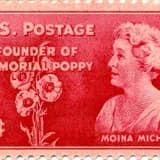
On November 9, 1918, in New York, Moina Michael conceived the Flanders Fields Memorial Poppy and vowed to always wear a red poppy in remembrance.
On November 9, 1918, while serving as a YMCA Overseas War Secretary in New York City, Moina Belle Michael experienced the defining inspiration of her life. Working amid the tension of the closing days of World War I, she encountered John McCrae’s poem "In Flanders Fields" and was deeply moved by its imagery of red poppies growing among soldiers’ graves.
That day she wrote her response poem, "We Shall Keep the Faith," and resolved that she would always wear a red poppy in remembrance of those who served and died in the war. In that moment she conceived the idea of the "Flanders Fields Memorial Poppy" as a distinctive emblem of remembrance and a moral pledge to "keep the faith" with the fallen.
This decision is widely recognized as the first conception of the poppy as a formal remembrance symbol for World War I service members, marking a conceptual innovation rather than a legal or organizational act. From it would grow a global movement in which poppies symbolized not only memory but also practical support for veterans through fundraising campaigns.
In the context of 1918, a woman civilian conceptualizing a new commemorative emblem and vowing publicly to wear it challenged conventional gender roles and the boundaries of women’s civic engagement. Michael’s November 9 resolution seeded an international tradition that still shapes how wars are remembered today.