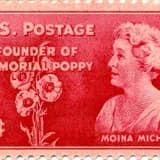
By March 1, 1919, Moina Michael’s persistent advocacy had launched the organized Flanders Fields Memorial Poppy emblem campaign.
By March 1, 1919 (representing the documented launch month), Moina Belle Michael had moved beyond personal advocacy to a sustained campaign for the memorial poppy emblem. After months of writing letters, speaking to civic leaders, and enlisting support from veterans’ groups, her persistent efforts culminated in the formal "launch" of the poppy emblem as a recognized symbol of tribute and support for World War I veterans.
Accounts from Georgia Women of Achievement and related histories emphasize that by March 1919, her idea had spread beyond New York and into broader organizational circles, including the American Legion and allied groups. This launch marked the transition from an individual’s symbolic commitment to an organized movement with national aspirations.
Historically, this is regarded as the first organized campaign to promote the poppy as a remembrance emblem, setting a precedent for later large-scale distribution drives and fundraising activities. At a time when women were still fighting for full political rights, Michael’s successful advocacy within male-dominated veterans’ organizations showcased the capacity of women reformers to shape public memory and social policy.
Although exact meeting dates are less clearly documented, the March 1919 milestone signifies the moment when the poppy became a recognized tool for both commemoration and relief, laying the groundwork for international adoption in the 1920s and for the enduring poppy appeals of the British Legion, American Legion Auxiliary, and many others.