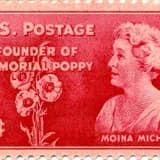
Death of Moina Belle Michael, “The Poppy Lady,” on May 10, 1944, after poppy sales had raised about $200 million for veterans’ causes.
Moina Belle Michael died on May 10, 1944, closing a life devoted to education and veterans’ welfare. Biographical accounts note that by the time of her death, approximately $200 million had been raised in the United States and England through the sale of memorial poppies, funds largely directed to supporting disabled and needy veterans and their families.
Michael spent her final decades in Georgia, continuing to lecture and write about the poppy movement even after retiring from teaching. Her 1941 autobiography, The Miracle Flower: The Story of the Flanders Fields Memorial Poppy, had already documented her struggles and victories in securing official recognition of the emblem.
Her death occurred during World War II, at a time when the poppy she championed for World War I remembrance was increasingly being used to honor casualties of subsequent conflicts as well. Known widely as "The Poppy Lady", she left behind not only a global fundraising tradition but also a transformed culture of remembrance in which ordinary citizens could visibly participate.
The May 10, 1944 date is now a reference point for evaluating her impact: in less than three decades, an idea born in a YMCA office in 1918 had generated massive charitable resources and reshaped public rituals around war and memory. Her death marked the end of her personal advocacy but not the end of the poppy’s role as a symbol of collective obligation to veterans.