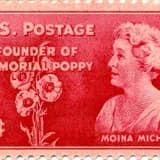
On November 9, 1918, Moina Michael organized the first group poppy-wearing effort and consummated the first sale of Flanders Fields Memorial Poppies.
Also on November 9, 1918, the very day she conceived the memorial poppy emblem, Moina Belle Michael took immediate practical action. Working at the YMCA Overseas War Workers’ headquarters, she adorned the front desk with red silk poppies and invited visiting servicemen and staff to wear them in memory of those who had died in Flanders fields.
She later described this as the first group effort asking people to wear poppies for remembrance and, after being given money to purchase additional flowers, she considered that she had made the first sale of the Flanders Fields Memorial Poppy. This small, informal transaction inaugurated the idea of using poppies not only as a personal symbol but as a shared public act of commemoration.
In an era when organized fundraising and symbolic campaigns for veterans were still evolving, Michael’s initiative represented a pioneering fusion of memorial culture and philanthropy. Her actions demonstrated how a woman working in a support role could leverage moral authority and creativity to shape national practices.
This November 9 event is historically important because it marks the moment when the poppy moved from poetic image to tangible emblem. The first group wearing and first sale created a template for later large-scale poppy distributions that have since raised hundreds of millions of dollars for veterans’ welfare and embedded the poppy in public rituals of remembrance worldwide.