← All women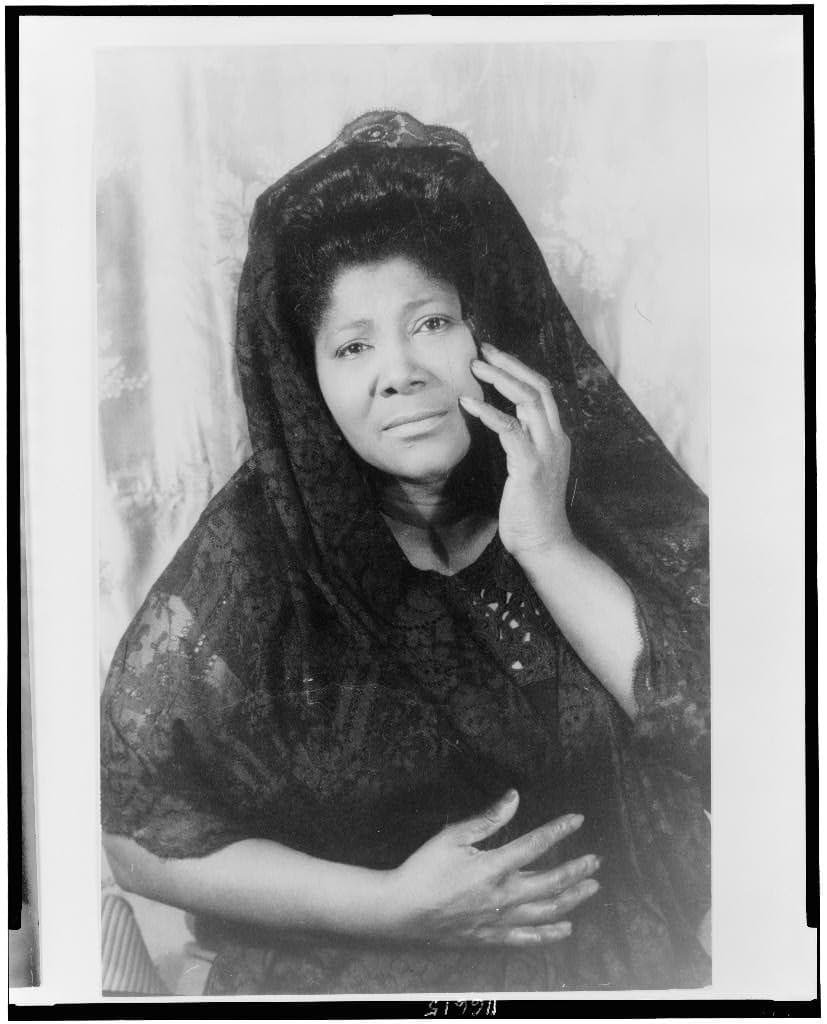
American · Arts · Activism · Politics
Mahalia Jackson
October 26, 1911 – January 27, 1972
Early life and background
Mahalia Jackson was born October 26, 1911, in New Orleans, Louisiana, as Mahala Jackson. She grew up in a Black working-class neighborhood in a city shaped by segregation, maritime labor, church culture, and rich musical traditions. Her family background was modest and marked by the hardships common to many African American families in the early twentieth-century South. Jackson’s father, Johnny Jackson, worked in laboring and preaching roles, while her mother, Charity, worked as a laundress and domestic worker. The church became the central organizing force in her early life, both spiritually and musically. She began singing in church as a child and absorbed the emotional directness and devotional intensity that would later define her performing style.
Jackson’s childhood was not easy. She was raised in a large, crowded household and experienced instability, loss, and the limitations imposed by segregation. Yet the Black church offered her a strong sense of belonging and a musical education. In New Orleans, gospel singing existed alongside blues, jazz, and a wide range of popular and sacred styles. Jackson would eventually synthesize the fervor of church worship with a vocal technique powerful enough to fill concert halls. Although she had limited formal schooling, she developed an extraordinary ear, a deep religious commitment, and the ability to communicate conviction through song.
Move to Chicago and early career
As a young woman, Jackson moved to Chicago, where many African Americans from the South were building new lives during the Great Migration. In Chicago she became connected with the city’s strong Black church network and joined the choir at Greater Salem Baptist Church. The city offered more opportunities for performance than she had found in New Orleans, but racial barriers remained severe. Black women singers were still expected to navigate restricted circuits of church, neighborhood, and segregated entertainment venues. Jackson’s rise from those conditions is central to her significance as a historical figure.
Her first commercial recording session for Decca Records came on May 21, 1937. Although the release did not become commercially successful, the session marked an early professional milestone and demonstrated that the industry was beginning to notice her remarkable voice. In the late 1930s and early 1940s, she performed widely in churches and in gospel circles, developing a style distinguished by emotional force, improvisational feeling, and a contralto register of unusual depth. She was working at a time when gospel music was still fighting for recognition as a serious commercial genre.
Recording breakthrough and rise to fame
Jackson’s gospel recording career truly took shape on October 3, 1946, when she made her first gospel recordings for Apollo Records in New York. The label became an important platform for Black sacred music, and Jackson’s sessions there helped position her as one of the genre’s leading voices. Her next decisive step came on September 12, 1947, when she recorded “Move On Up a Little Higher”. The song became a landmark success, selling millions of copies and reaching No. 2 on the Billboard charts, an extraordinary achievement for a gospel record in the era of rigid genre separation.
The success of “Move On Up a Little Higher” changed the landscape of gospel music. It showed that a Black woman singing sacred music could become a mainstream recording star without abandoning religious expression. For Jackson, the hit transformed her from a respected gospel performer into a national figure. The recording’s popularity also expanded the audience for gospel far beyond the Black church and helped establish the genre as a commercially and culturally significant part of American music. Its influence continued into 1948 and beyond, as her fame grew and her recordings circulated widely.
In the following years, Jackson remained closely associated with major milestones that expanded the public presence of gospel. She performed at Carnegie Hall on October 4, 1950, an appearance widely remembered as the first time a gospel singer appeared at the famous venue. She received France’s Académie Charles Cros Grand Prix du Disque on January 14, 1952, becoming the first gospel singer to receive the award. These honors signaled that her voice had achieved not just commercial success but also international cultural recognition.
Jackson signed with Columbia Records on November 24, 1954, strengthening her presence in the mainstream recording industry. She also continued to score crossover successes, including “He’s Got the Whole World in His Hands,” which reached the pop charts on March 29, 1958, and “Silent Night, Holy Night,” which reached the pop charts on December 8, 1962. These achievements showed that gospel-based repertoire could thrive in the broader popular marketplace while still preserving spiritual seriousness.
Public performances and civil rights era prominence
Jackson’s career increasingly intersected with national politics and the civil rights movement. She performed at the Democratic National Convention on August 13, 1956, bringing gospel to a major political stage. On January 20, 1961, she sang the national anthem at the inauguration of President John F. Kennedy, further confirming her place in American public life. These appearances reflected both her broad appeal and the growing recognition of Black artists in spaces once dominated by white political and cultural authority.
Her most famous public political moment came on August 28, 1963, when she sang at the March on Washington for Jobs and Freedom. From the podium at the Lincoln Memorial, Jackson performed gospel songs before Martin Luther King Jr. delivered his iconic “I Have a Dream” speech. She is also remembered for encouraging him to “tell them about the dream.” This moment fused music, faith, and protest into one of the most enduring images of the civil rights era. Jackson’s participation showed how gospel could function as a language of hope and moral urgency in the struggle against racial inequality.
Personal life
Jackson’s personal life included marriages, divorce, and a deep devotion to the church community that sustained her work. She was married to Isaac Hockenhull and later to Sigmund Galloway; both marriages ended in divorce. Historical accounts also note that she had no children. Despite the demands of fame, she remained strongly connected to religious life and to the spiritual identity that had shaped her earliest singing. Her life story reflects the challenges many Black women performers faced in balancing professional ambition, personal relationships, and the expectations of religious communities.
Awards, honors, and recognition
Jackson received broad recognition over her career and after her death. She was celebrated as the Queen of Gospel and came to be regarded as one of the most influential vocalists of the twentieth century. She earned major recording honors, including the Grand Prix du Disque, and her albums and singles sold in large numbers, making her one of the best-selling gospel artists of her era. Later tributes continued to underscore her significance in American music history.
Her influence also extended to symbolic public recognition. Her presence at Carnegie Hall, the Democratic National Convention, and the Kennedy inauguration demonstrated that gospel music could command prestige in settings once closed to it. By moving between church, concert hall, political event, and recording studio, Jackson helped redefine what a gospel singer could be and where gospel could belong.
Later life and death
In her later years, Jackson’s health declined, but her reputation only grew. She remained a central reference point for gospel singers and for artists across multiple genres who admired her vocal power and emotional authenticity. She died on January 27, 1972, in Evergreen Park, Illinois, near Chicago, from complications related to diabetes. Her death was widely marked as the end of an era in American gospel music, yet her recordings and public legacy continued to shape popular memory.
Legacy
Mahalia Jackson’s legacy rests on several linked achievements. She transformed gospel music from a primarily church-based form into a national and international art. She broke barriers for Black women in recording, concert performance, and public ceremony. She also helped make gospel an audible force in the civil rights movement, showing that spiritual music could serve as a language of political dignity and collective aspiration. Her voice was unusually powerful, but her historical importance lay in how she used that voice: to expand the reach of Black sacred music, to challenge segregation’s cultural limits, and to give public expression to faith, suffering, and hope.
For later generations, Jackson became a model of artistic authority rooted in community and conviction. Her recordings remain foundational to gospel history, and her life story continues to illustrate how a Black woman singer could alter the soundscape of America while also participating in the moral struggles of her time.
Dated achievements
14 indexed.
- Oct261911Arts
Born in New Orleans, Louisiana
Birth of Mahalia Jackson in New Orleans, Louisiana, later celebrated as the “Queen of Gospel.”
View details Britannica biography of Mahalia Jackson - May211937Arts
First commercial recording session for Decca Records
Jackson made her first commercial recording session for Decca Records, beginning her recorded-music career.