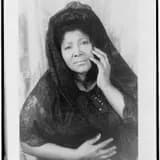
Jackson performed at the Democratic National Convention, bringing gospel to a major national political stage.
On August 13, 1956, Mahalia Jackson performed at the Democratic National Convention, bringing gospel music into one of the nation’s most visible political arenas. Her appearance illustrated how her voice had become part of the civic and public life of the United States, not just its religious life.
In the 1950s, a Black woman gospel singer performing at a national party convention carried significance beyond entertainment. The event took place in a period still defined by segregation and political exclusion for African Americans, especially in the South. Jackson’s presence on that stage signaled a widening public acceptance of Black musical authority and a growing recognition that gospel belonged in the nation’s political as well as cultural conversation.
The performance also foreshadowed her later association with the civil rights movement. Jackson was increasingly seen not only as a star vocalist but also as a figure whose music could speak to collective hope, dignity, and social change. The convention appearance thus became part of the larger story of her public influence.