← All women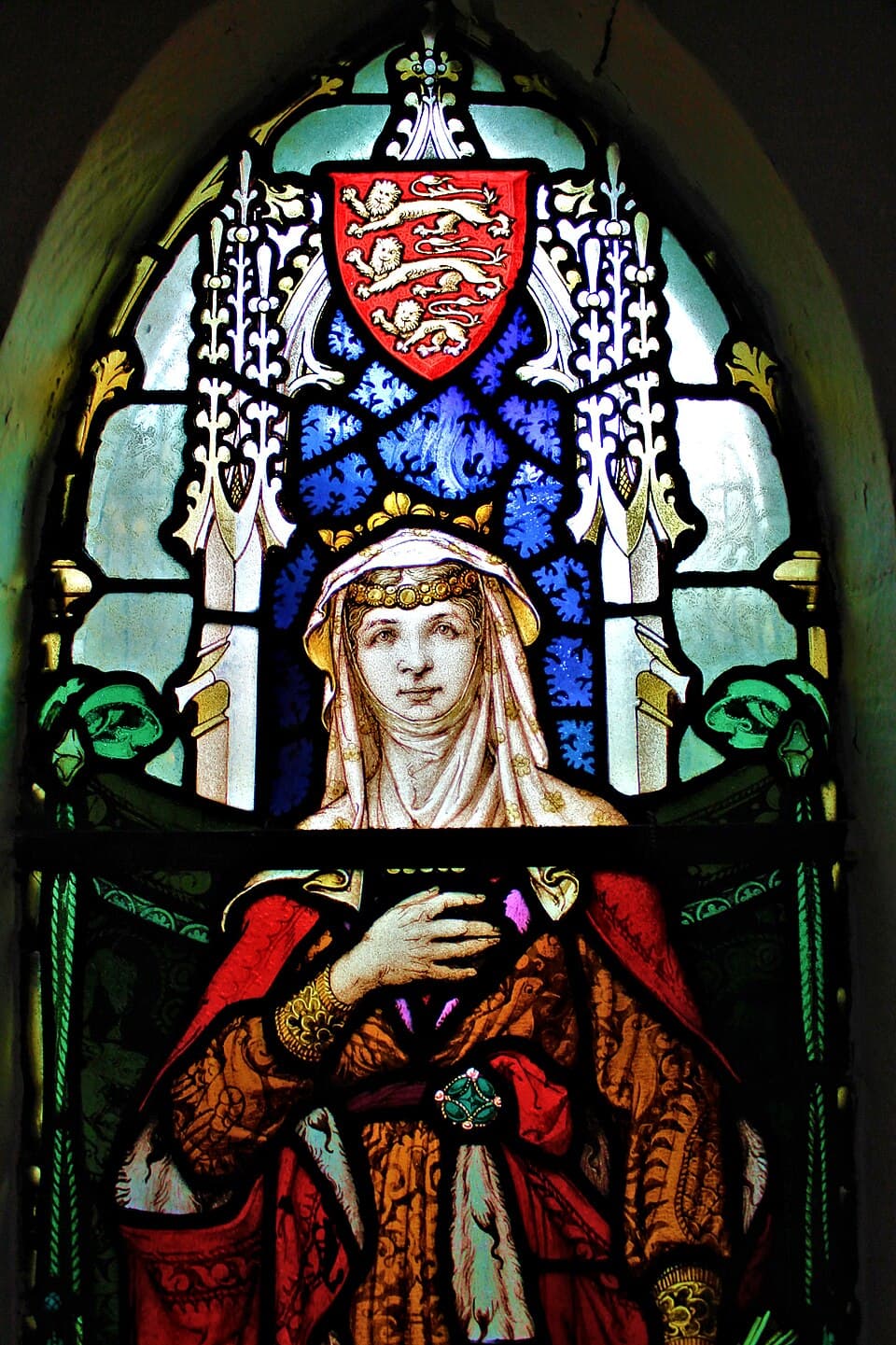
English, Welsh · Politics
Joan Daughter of King John
1191 – February 2, 1237
Early life and background
Joan, known in Welsh as Siwan, was an illegitimate daughter of King John of England and an unknown mother. The surviving evidence does not securely identify her mother, and medieval sources preserve conflicting or uncertain information about Joan’s parentage. Modern historians generally place her birth around 1191 or 1192, but no contemporary record gives an exact day or month. She was one of King John’s acknowledged natural children and later became one of the most politically important royal women of her generation.
Joan’s early years are poorly documented, which is typical for royal women who were not destined for a throne and whose value was often measured through marriage and alliance. Even so, the documentary record shows that she was already under royal management by 1203, when King John ordered a ship to carry her from Normandy to England. That brief administrative notice reveals both her location and her significance within the broader machinery of royal family policy. It also places her life in the context of the Anglo-French crisis that followed the loss of Normandy, when John increasingly used marriage diplomacy to strengthen his position.
Joan was the half-sister of Henry III through King John, and her legitimacy was later addressed through ecclesiastical action. In 1226, Pope Honorius III issued a decretal declaring her legitimate on the ground that neither of her parents had been married to anyone else at the time of her birth. That ruling did not change her birth circumstances, but it clarified her canonical status. Her life therefore illustrates an important medieval distinction between social birth status and ecclesiastical legitimacy.
Marriage and entry into politics
Joan’s public life began to take shape through a diplomatic marriage. In 1201, her hand was promised to Llywelyn ap Iorwerth, prince of North Wales, as part of an Anglo-Welsh political settlement. The arrangement was formalized in a treaty at Dover on 5 January 1204, and the marriage itself took place at Shrewsbury on 19 April 1205, Maundy Thursday. Through this union, Joan entered the court of one of the most powerful rulers in medieval Wales and became a central figure in the relationship between Gwynedd and the English crown.
The marriage was politically loaded. For King John, it helped secure the Welsh frontier through a dynastic alliance. For Llywelyn, it connected him to the English royal family and enhanced his own position. For Joan, it created a life in which her personal relationships were inseparable from statecraft. Medieval female consorts were expected to embody prestige, manage households, and produce heirs; Joan also became a conduit for negotiation between hostile or wary powers. This role was not simply ceremonial. Later sources describe her as a principal arbitrator between Llywelyn and successive English rulers.
Diplomatic career
Joan’s reputation rests largely on her role as a political mediator. In the turbulent years surrounding John’s conflict with Wales, she appears as a figure of practical significance rather than ornamental consort. On 18 June 1211, at Woodstock, she intervened with her father and helped secure terms that restored much of Llywelyn’s power after John’s campaign in Gwynedd. This episode is among the clearest demonstrations of her diplomatic agency. She had access to both courts, and that access allowed her to act where formal envoys or military pressure were insufficient.
Her influence continued during the reign of Henry III. In the years after John’s death in 1216, Joan remained a principal intermediary between Gwynedd and the English crown. Sources emphasize her role in maintaining communication, reducing tension, and helping to shape peace terms. During this period she became more than a dynastic bride: she functioned as a political actor whose relationship to both sides made her valuable in negotiations that official male diplomats could not always resolve.
Joan’s status was formally acknowledged on 18 August 1221, when she was styled domina Walliae, “Lady of Wales,” in an agreement involving Llywelyn and their son Gruffudd. This appears to be the earliest recorded use of the title for her and is an important titulary first. The designation recognized her standing in the Welsh polity and reflects the extent to which her identity had become bound to the political authority of her husband’s court.
Legitimacy, status, and ecclesiastical recognition
Joan’s illegitimate birth remained a matter of legal and political consequence. In a society where birth status shaped inheritance rights and social honor, canon law could either reinforce or mitigate exclusion. The papal decretal of 29 April 1226 from Honorius III declared Joan legitimate, a ruling based on the claim that her parents had been unmarried at the time of her birth. The decision regularized her standing in the eyes of the Church but did not elevate her to any claim on the English crown.
This event is important because it shows how medieval authority operated across overlapping systems. Royal blood could confer prestige, but legitimacy required legal validation, and Joan’s position was shaped by both family politics and ecclesiastical judgment. The ruling also strengthened her public identity as a royal woman in her own right, not merely as King John’s daughter or Llywelyn’s wife.
Scandal, imprisonment, and restoration
Joan’s life was not defined only by diplomacy. In the late 1220s and early 1230s she became entangled in a scandal involving William de Braose, an event that altered her standing at court. The affair led to de Braose’s execution and Joan’s imprisonment by Llywelyn. Although the exact sequence of events is not documented here by day and month for every stage, the consequences were public and severe.
On 24 June 1230, however, Joan was publicly reconciled with Llywelyn at Aber on Midsummer Day and resumed her place at court. The reconciliation suggests that her political usefulness and family status remained strong enough to overcome disgrace. In a medieval context, such restoration was not merely personal forgiveness; it was a deliberate reordering of court politics and dynastic stability. Joan’s return to favor demonstrates the resilience of her position and the enduring need for her as a mediator and consort.
Children, family, and personal life
Joan and Llywelyn had children, including Gruffudd ap Llywelyn, whose presence in the 1221 record helps establish the family context of Joan’s titulary recognition. Her motherhood mattered politically because children born of the union linked the Welsh ruling house to the English royal line. As in many medieval dynasties, offspring were not private matters alone; they were future actors in inheritance disputes, alliance-building, and succession politics.
Her family relationships were unusually complex. She was the daughter of a king, the half-sister of a future king, and the wife of the prince of North Wales. Those overlapping roles made her an ideal intermediary and also placed her under constant political pressure. Joan’s life therefore provides a vivid example of how elite women in the Middle Ages were expected to serve dynastic interests while navigating the personal consequences of those demands.
Death and legacy
Joan died on 2 February 1237 at Aber and was buried at Llanfaes. Her death ended a career that had made her one of the most consequential royal women in the history of Anglo-Welsh relations. Though not a ruler in her own right, she helped sustain communication between two political worlds and was repeatedly trusted to mediate at moments of crisis. That role was extraordinary in the context of the early thirteenth century, when women were commonly excluded from formal governance.
Her legacy has been shaped by the rediscovery of her political importance in modern scholarship. Later historians and biographers have emphasized that she was not merely a pawn in dynastic marriage but a capable diplomatic intermediary whose influence affected the course of relations between England and Wales. Her designation as Lady of Wales, her papal legitimization, and her repeated interventions in negotiation all testify to a woman who used the limited avenues available to her with notable effectiveness.
Joan’s historical significance also lies in what her life reveals about medieval women’s power. She did not command armies or hold a formal office, but she exercised influence through access, kinship, and political trust. Her story shows that the medieval court could create space for women to act decisively, even while the structures around them remained deeply patriarchal. In that sense, Joan, Lady of Wales, stands as one of the most important women in the political history of thirteenth-century Britain.
Dated achievements
8 indexed.
- Mar211203Science
Royal order for Joan's passage from Normandy to England
King John ordered Stephen Teutonicus to provide a ship to carry his illegitimate daughter Joan from Normandy to England — one of the earliest specific records of her existence.
View details Women of Magna Carta: Joan - Jan051204