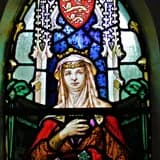
A treaty concluded at Dover between King John and Llywelyn ap Iorwerth, Prince of North Wales, arranged Joan's marriage, formalising her role in Anglo-Welsh diplomacy.
On 5 January 1204, a treaty was concluded at Dover between King John and Llywelyn ap Iorwerth, the ambitious Prince of Gwynedd who was steadily consolidating power across North Wales. Among its provisions was the arrangement of a marriage between Llywelyn and Joan, John's illegitimate daughter, cementing an alliance between the English Crown and the most powerful native Welsh ruler of the age.
This treaty exemplifies the medieval practice of using women — even illegitimate daughters — as instruments of statecraft. By offering Joan in marriage, King John sought to bind Llywelyn into a relationship of nominal subordination and alliance, hoping to stabilize the volatile Anglo-Welsh frontier without costly military campaigns. For Llywelyn, the match offered legitimacy and a direct kinship tie to the English royal house, considerably enhancing his prestige among rival Welsh princes.
The betrothal set in motion a partnership that would prove remarkably consequential: Joan would go on to serve for decades as a crucial intermediary between her husband's court and her father's (and later her half-brother's) kingdom, at times personally intervening to prevent war. The Dover agreement thus marks the formal beginning of one of the most politically significant marriages in Anglo-Welsh medieval history, with Joan's diplomatic value already anticipated by both signatories even before the wedding itself took place a year later.