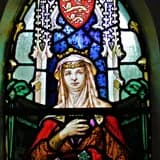
On Maundy Thursday at Shrewsbury, Joan married Llywelyn ap Iorwerth, thereafter moving to Wales to become his consort and a central figure in Anglo-Welsh politics.
On 19 April 1205, which fell that year on Maundy Thursday, Joan's marriage to Llywelyn ap Iorwerth, Prince of Gwynedd, was solemnised at Shrewsbury, a strategic English border town frequently used for Anglo-Welsh negotiations. The choice of Shrewsbury, rather than London or a Welsh court, symbolised the liminal, frontier nature of the alliance being forged.
Following the ceremony, Joan travelled into Wales to take up residence as Llywelyn's consort, adopting a role that blended domestic partnership with high-stakes diplomacy. Though she was the illegitimate daughter of a king, her position as wife of the most powerful Welsh ruler of the era gave her considerable influence, and she would soon become known simply as Siwan in Welsh tradition.
This marriage was far more than a personal union; it was a cornerstone of King John's strategy to manage the Welsh march through kinship ties rather than constant warfare. For Llywelyn, it provided a direct connection to the English throne that bolstered his authority among competing Welsh dynasties. Over the following three decades, Joan would leverage this marital bond to mediate repeatedly between her husband and the English Crown, making the Shrewsbury wedding the foundational event of her long and unusually influential political career as a royal consort straddling two nations.