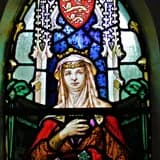
Pope Honorius III issued a decretal declaring Joan legitimate, ruling that neither of her parents had been married to others at the time of her birth.
On 29 April 1226, Pope Honorius III, responding to petitions likely submitted on Joan's behalf, issued a formal decretal declaring her legitimate under canon law. The ruling was grounded in the legal principle that neither of her parents — King John and an unnamed mother — had been married to other parties at the time of Joan's conception and birth, satisfying the conditions under which the medieval Church could retroactively recognise legitimacy.
This papal intervention was a significant moment in Joan's life, addressing what had been a persistent social and political vulnerability: her status as an illegitimate child in a world where legitimacy carried enormous weight for inheritance, marriage alliances, and social standing. Although she had already achieved substantial political influence as Lady of Wales, formal legitimation by the highest ecclesiastical authority in Christendom removed any lingering canonical stigma and reinforced the standing of her children, including her son Dafydd ap Llywelyn, who Llywelyn intended as his heir.
The decree illustrates the intersection of medieval canon law, dynastic politics, and gender, showing how even a woman who had achieved great personal influence still required formal ecclesiastical validation to fully secure her family's legal and political future. It also reflects the lengths to which Llywelyn and Joan went to safeguard the succession rights of their son Dafydd against potential challenges from Llywelyn's elder, illegitimate son Gruffudd.