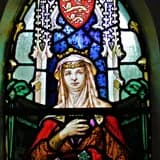
Joan was formally styled 'domina Walliae' (Lady of Wales) in an agreement with Llywelyn and their son Gruffudd — the earliest recorded use of this title for her.
On 18 August 1221, in an agreement involving her husband Llywelyn ap Iorwerth and their son Gruffudd, Joan was for the first time formally styled domina Walliae — 'Lady of Wales.' This is the earliest recorded documentary instance of the title being applied to her, marking a significant moment in her public and political identity.
The adoption of this title reflected Joan's elevated and increasingly formalised status within the Gwynedd court, moving beyond the informal influence she had wielded as consort and negotiator toward an officially recognised position of authority. It paralleled the manner in which Llywelyn himself was gradually asserting a princely, quasi-sovereign status over Wales, and Joan's title mirrored this consolidation of dynastic prestige.
This designation stands as a genuine historical first: no earlier woman is documented as having held or been formally styled with this specific title in the context of medieval Wales. It signalled that Joan's authority was recognised not merely as derivative of her husband's rule, but as carrying its own distinct institutional and symbolic weight — a rare acknowledgment for a woman, and particularly notable given her status as the illegitimate daughter of an English king who had married into Welsh royalty.
The title would later be adopted more widely by chroniclers and historians to refer to Joan, cementing her historical identity as Joan, Lady of Wales, distinguishing her definitively from her legitimate half-sister Joan of England, Queen of Scotland.