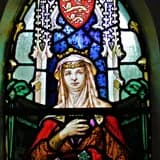
On Midsummer Day at Aber, Joan was publicly reconciled with Llywelyn after the execution of William de Braose and her imprisonment, resuming her position at court.
On 24 June 1230 — Midsummer Day — at the royal court of Aber, Joan was publicly reconciled with her husband Llywelyn ap Iorwerth following one of the most dramatic episodes of her life: her alleged affair with the Anglo-Norman marcher lord William de Braose. De Braose had been captured in Llywelyn's chambers earlier that year and was subsequently executed by hanging, a scandal that reverberated across both Wales and England and threatened to permanently destroy Joan's position and reputation.
Following the affair's exposure, Joan was placed under house arrest for approximately a year, a severe punishment that nonetheless stopped short of the more brutal penalties sometimes meted out to noblewomen accused of adultery in this period. Her eventual public reconciliation with Llywelyn on Midsummer Day 1230 was a remarkable act of political and personal rehabilitation, demonstrating both the depth of the couple's long partnership and Llywelyn's continued reliance on Joan's diplomatic value.
This event is historically significant as a rare documented instance of a medieval noblewoman surviving a public scandal of this magnitude and returning to a position of influence and trust. It underscores the complexity of Joan's character as remembered in both Welsh and English sources, and her resilience in continuing her role as intermediary between Gwynedd and the English Crown even after this profound personal and political crisis.