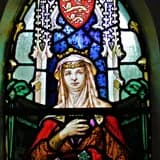
Joan personally negotiated with her father King John at Woodstock, securing restoration of much of Llywelyn's lands and power after John's punitive campaign in Gwynedd.
On 18 June 1211, Joan travelled to Woodstock to negotiate directly with her father, King John, following a devastating royal campaign against Llywelyn ap Iorwerth in Gwynedd. John's invasion had pushed deep into Welsh territory, forcing Llywelyn to sue for peace on harsh terms, including the surrender of hostages and significant territorial concessions.
Joan's intervention at this juncture was pivotal. Acting not merely as a wife but as a skilled political emissary, she used her unique position as both King John's daughter and Llywelyn's consort to negotiate terms that ultimately restored much of her husband's lands and authority in the aftermath of the campaign. This required considerable political acumen and personal courage, as she was essentially advocating for the defeated party directly to the victorious monarch — her own father.
This episode is historically significant as one of the earliest clearly documented instances of a medieval woman functioning as a formal diplomatic negotiator between two warring powers, rather than merely a passive marital pawn. It demonstrates the trust Llywelyn placed in Joan's judgement and connections, and the degree to which King John was willing to engage with her as a legitimate political actor. The Woodstock negotiation set a precedent for Joan's subsequent decades-long career as the principal intermediary between Gwynedd and the English Crown, a role she would continue to fulfill under Henry III after John's death.