← All women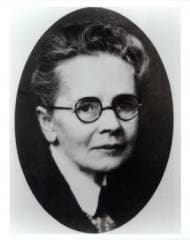
American · Arts
Julia Morgan
January 20, 1872 – February 2, 1957
Early Life and Background
Julia Morgan was born on 20 January 1872 in San Francisco, California, into a middle‑class family with East Coast roots. She was the eldest daughter of Charles Bill Morgan, a mining engineer and businessman, and Eliza Woodland Parmelee Morgan, who came from a well‑educated New York family.[1][4] The Morgans later moved across the bay to Oakland, where Julia spent much of her childhood.
Growing up in the Bay Area during the late 19th century, Morgan witnessed rapid urban growth and the volatility of a region shaped by mining, railroads, and speculative capitalism.[1] Her family encouraged education; she attended Oakland High School and showed strong aptitude for mathematics and drawing, interests that would eventually steer her toward engineering and architecture.[2] At a time when women’s educational opportunities were limited, her parents’ support was crucial in enabling her to pursue higher education.
One formative influence was her cousin, Pierre LeBrun, a successful architect in New York.[2] Through family visits and correspondence, Morgan was exposed to the idea that architecture could be a respectable professional career, not merely an artistic hobby. She was also aware of contemporary debates about women’s roles, but rather than embracing traditional paths, she gravitated toward the technical and structural aspects of building.
Education and Training
In 1890, Morgan enrolled at the University of California, Berkeley, initially studying in the College of Letters and Science before transferring to the College of Civil Engineering.[4][5] There she came under the mentorship of Bernard Maybeck, an innovative architect and instructor who recognized her talent and encouraged her to combine engineering with architectural design.[4] Maybeck’s influence was decisive: he advised her to seek formal training in architecture at the École des Beaux‑Arts in Paris, then considered the pinnacle of architectural education.
On 16 May 1894, Morgan graduated with a Bachelor of Science in civil engineering from UC Berkeley, becoming the first woman to earn an engineering degree (B.S. in civil engineering) from the university.[2][5] Her engineering education gave her a rigorous grounding in structural analysis, materials, and mathematics, which later distinguished her work for its technical soundness and resilience, particularly in earthquake‑prone California.
In 1896, following Maybeck’s advice, Morgan moved to Paris to pursue admission to the École nationale supérieure des Beaux‑Arts.[4][5] The École, however, did not welcome women. Morgan studied in private ateliers and preparatory schools, honing her drawing and design skills while repeatedly attempting the demanding entrance examinations. Her first applications were rejected, partly due to institutional resistance to admitting women.[5]
After two years of effort, Morgan’s persistence paid off. In 1898 she became the first woman to pass the entrance examinations and be enrolled in the architecture section of the École des Beaux‑Arts.[4][5] Detailed accounts place her successful admission on 2 November 1898, a moment that broke one of the profession’s most prestigious educational barriers.[5][11]
At the École, Morgan studied under notable Beaux‑Arts masters, learning the school’s rigorous methods of composition, axial planning, and historical stylistic analysis.[5] She completed complex design problems and participated in juried competitions, steadily accumulating the points required for graduation. In 1902, she earned her certificat d’études in architecture, becoming the first woman to graduate in architecture from the École; archival research identifies 26 March 1902 as the date of her certification.[5][4][14]
Early Career and Return to California
After receiving her Beaux‑Arts certification, Morgan remained in Europe briefly, then returned to California in 1902.[4] Back in the Bay Area, she joined the office of Bernard Maybeck, gaining experience in West Coast practice and translating her Parisian training into local projects.[4] Her work in Maybeck’s studio included contributions to residential and institutional designs that combined structural clarity with Arts and Crafts sensibilities.
Morgan soon sought formal recognition as an architect in her home state. Licensing requirements were becoming more standardized, and passing the state examinations was essential for independent practice. In 1904, she sat for and passed the California architect licensing exam. On 13 March 1904, she was granted a California state architect’s license, becoming the first woman architect licensed in California.[5][11]
Just weeks later, on 1 April 1904, Morgan opened her own architectural office in San Francisco’s financial district.[5][2] Operating from the city’s commercial center, she quickly built a clientele that included universities, religious organizations, and women’s groups. Her firm was known for its disciplined organization and thorough supervision of construction, reflecting both her engineering training and Beaux‑Arts background.
Rebuilding After the 1906 Earthquake
The 1906 San Francisco earthquake and fire dramatically reshaped Morgan’s early career. The disaster destroyed much of the city’s built fabric, creating urgent demand for structurally sound rebuilding.[1][4] Morgan’s engineering expertise and understanding of reinforced concrete placed her at the forefront of reconstruction efforts.
One notable commission was the reconstruction of the Fairmont Hotel, whose shell survived the fire but required complete interior redesign and structural strengthening.[1] Morgan’s work on the Fairmont, completed by 1907, used modern materials and careful detailing to create a luxurious yet resilient interior, earning her widespread professional respect.[4] She also designed numerous houses and institutional buildings in the post‑earthquake years, demonstrating that elegant design could be compatible with rigorous structural safety.
Major Works and Accomplishments
Over a 46‑year career, Morgan designed more than 700 buildings, most of them in California, but also in other parts of the American West.[1][2][4] Her projects span a wide range of types, including private residences, university buildings, churches, hotels, women’s clubs, and facilities for youth and community organizations.
She is best known for Hearst Castle in San Simeon, California, commissioned by newspaper magnate William Randolph Hearst. The formal start of the commission is dated to 15 September 1919, when Hearst engaged Morgan to design a hilltop retreat on his coastal ranch.[20] What began as a modest complex evolved into a sprawling estate with main houses, guest cottages, pools, gardens, and service structures, all orchestrated by Morgan over nearly three decades.[1][20]
At Hearst Castle, Morgan combined Beaux‑Arts planning with Spanish Colonial Revival and Mediterranean influences, integrating imported art and architectural fragments into new construction.[1] She solved demanding engineering challenges associated with the steep site, water supply, and seismic risk. The estate is now a National Historic Landmark and California State Park, recognized both for its architecture and its role in American cultural history.[20]
Morgan’s commitment to institutions serving women and youth is another defining feature of her practice. She designed numerous buildings for the Young Women’s Christian Association (YWCA), beginning around 1913.[2][20] These included facilities in cities such as San Francisco, Oakland, and Honolulu, often featuring welcoming common spaces, swimming pools, and gyms that promoted women’s physical and social well‑being. Through these projects, Morgan shaped environments that supported women’s autonomy and community in an era when women’s public lives were expanding.
She also became a favored architect for Mills College, a women’s college in Oakland, designing structures such as El Campanil, a reinforced‑concrete bell tower completed in 1904.[11] The tower famously survived the 1906 earthquake without damage, demonstrating the effectiveness of Morgan’s structural design and contributing to wider acceptance of reinforced concrete in California.[11] Additional campus buildings reinforced her reputation as an architect who combined aesthetic refinement with advanced engineering.
Among her other significant works are private residences in Berkeley and the Bay Area, the Asilomar Conference Grounds near Pacific Grove, and clubhouses and retreat centers for organizations like the YWCA and Young Men’s Christian Association (YMCA).[1][20] Her designs often show an Arts and Crafts sensibility—emphasizing craftsmanship, natural materials, and harmony with the landscape—alongside Beaux‑Arts discipline.
Professional Practice and Working Methods
Morgan’s office, active from 1904 into the early 1950s, was notable for its structured workflow and emphasis on collaboration. She employed a number of draftsmen and assistants, some of whom were women, providing training in an environment more open than many contemporary firms.[2] She personally oversaw construction, frequently visiting sites and insisting on high standards of workmanship.
Her approach to clients was pragmatic and service‑oriented. Morgan was known for listening closely to clients’ needs and budgets rather than imposing a signature style.[1] As a result, her work is stylistically varied: she designed in Beaux‑Arts classicism, Tudor, Mediterranean, Mission, and Modern idioms, depending on context and client preference. This adaptability contributed to her professional success but may have initially obscured her personal design identity in historical narratives.
Despite her achievements, Morgan avoided self‑promotion. She rarely gave public lectures or sought media attention, and she discouraged biographical writing during her lifetime.[9] This modesty reflected both her personality and the gendered expectations of her era, which often penalized women perceived as overly ambitious. Only after her death did scholars begin to fully reconstruct the scope of her work.
Awards, Honors, and Recognition
During her lifetime, Morgan received respect within professional circles, but she did not accumulate the kind of high‑profile awards often granted to male peers.[4] Her buildings, however, were widely admired, and her clients included some of the most prominent figures and institutions in California.
Posthumous recognition has been substantial. Morgan is now frequently described as one of the most important woman architects in United States history and among the most prolific architects of the American West.[5][4] Her projects such as Hearst Castle, YWCA buildings, and Mills College structures have been designated landmarks and are the subject of preservation efforts.
A key milestone came on 26 June 2014, when the American Institute of Architects awarded Morgan the Gold Medal, the organization’s highest honor.[2][9] She thus became the first woman in the award’s 107‑year history to receive the distinction.[2][16] The medal recognized her pioneering career, technical mastery, and lasting impact on the profession. The award also highlighted the long delay in fully acknowledging women’s contributions to architecture, as it was granted more than half a century after her death.
In addition, Morgan’s life and work are now widely featured in exhibitions, documentaries, and scholarly publications. Initiatives such as the Pioneering Women of American Architecture project, university archives, and museum programs have played major roles in reintroducing her to public and professional audiences.[2][10][20]
Personal Life
Morgan’s personal life was marked by privacy and dedication to work. She never married and had no children, choosing instead to focus her energy on her practice and clients.[4][1] Contemporary accounts note that she devoted long hours to design and site supervision, often at the expense of leisure.
She maintained close relationships with family members, particularly her siblings, and supported relatives through periods of difficulty.[2] Morgan also cultivated durable friendships with colleagues and clients, including long‑term patrons such as William Randolph Hearst and women leaders in organizations like the YWCA and Mills College.
Modern discussions sometimes explore Morgan in the context of women’s and LGBTQ history. Some later sources suggest that she may have formed deep same‑sex friendships and lived a life outside conventional heterosexual norms, though definitive evidence of her intimate relationships is limited and she left no explicit personal testimony on the subject.[3] What is clear is that she chose a path at odds with early‑20th‑century expectations of marriage and domesticity, instead constructing an identity around professional achievement and service.
Later Life and Retirement
By the late 1940s, Morgan began winding down her practice. She continued to supervise ongoing projects but reduced the volume of new commissions.[1] Her office closed in the early 1950s, after nearly half a century of continuous activity.[2] Even in semi‑retirement, she remained engaged with architecture through consultation and interest in preservation.
Morgan spent her final years quietly in the Bay Area, maintaining the low public profile that had characterized her entire career. On 2 February 1957, she died in San Francisco at the age of 85.[1][4] Obituaries recognized her as a distinguished architect and noted the breadth of her work, though they did not yet accord her the national icon status she would later achieve.
Legacy and Historical Impact
Julia Morgan’s legacy is multifaceted, encompassing architectural innovation, structural engineering, and the advancement of women in professional life. She is widely credited with helping to normalize women’s participation in architecture and engineering, demonstrating that women could earn technical degrees, command major commissions, and lead complex design teams.[2][5]
Architecturally, Morgan’s work is noted for its structural integrity, craftsmanship, and sensitivity to site and client needs. Her early and effective use of reinforced concrete, especially at Mills College and in post‑earthquake San Francisco, contributed to the broader acceptance of the material in California.[11] Her buildings often integrate indoor and outdoor spaces, employ fine detailing, and adapt historical styles to local climates and cultures.
Her designs for women’s institutions—including YWCA facilities and women’s colleges—have particular significance in women’s history.[2][20] By creating spaces where women could study, organize, exercise, and socialize, Morgan contributed to the physical infrastructure of emerging women’s movements. These buildings helped foster communities that supported women’s education, leadership, and activism.
Hearst Castle remains a central emblem of Morgan’s legacy, both as a work of architecture and as a symbol of her capacity to manage enormous, high‑profile projects. The estate’s continued preservation and interpretation by the State of California keep her name and work in the public eye.[20]
In recent decades, scholars have increasingly framed Morgan as a pioneer of modern feminism in architecture, not through overt political activism, but through her quiet, persistent achievement in a male‑dominated field.[8] Her example has inspired countless women to pursue careers in architecture and engineering, and her story is now widely taught in architectural history and women’s studies courses.
The 2014 AIA Gold Medal consolidated this reevaluation, placing Morgan in the highest echelon of architects recognized by the profession and underscoring the importance of revising historical canons to include women.[2][9] Ongoing research continues to uncover lesser‑known projects and aspects of her practice, further enriching understanding of her contribution.
Today, Julia Morgan stands as a central figure in the narrative of women’s advancement in the built environment: a technically adept, stylistically versatile architect who leveraged elite training and quiet determination to reshape the landscapes of California and to expand the horizons of what women could do in architecture.
Dated achievements
9 indexed.
- Jan201872Arts
Birth of Julia Morgan
Julia Morgan was born in San Francisco, California, the eldest daughter of Charles Bill Morgan and Eliza Woodland Parmelee Morgan.
View details Julia Morgan - Wikipedia - May161894Science
First woman to earn a B.S. in engineering from UC Berkeley
Morgan became the first woman to earn a B.S. in civil engineering from the University of California, Berkeley.