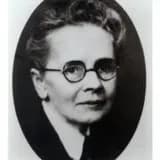
William Randolph Hearst formally engaged Morgan to design his San Simeon estate, later known as Hearst Castle, beginning her most famous commission.
On September 15, 1919, publishing magnate William Randolph Hearst formally engaged Julia Morgan to design and oversee construction of his sprawling estate at San Simeon on the central California coast—a project that would become known as Hearst Castle and remain her most celebrated and enduring work.
Hearst, who had known Morgan through prior smaller commissions and shared connections, gave her extraordinary creative latitude and an essentially open-ended budget, an almost unprecedented arrangement for any architect, let alone a woman in the male-dominated field. Over the next nearly three decades, Morgan would design the main Casa Grande building along with three opulent guesthouses, elaborate gardens, pools (including the iconic Neptune Pool), and an array of ancillary structures, blending Mediterranean Revival, Spanish Colonial, and Renaissance influences with cutting-edge structural engineering.
The commission showcased Morgan's extraordinary range: she coordinated the acquisition and integration of European antiques and architectural fragments Hearst collected, managed enormous construction logistics on a remote site, and maintained close, detailed communication with Hearst through thousands of letters and telegrams that documented every design decision.
Hearst Castle became a National Historic Landmark and a California State Historic Park, visited by hundreds of thousands of tourists annually. It stands as the defining achievement of Morgan's career, demonstrating her mastery of scale, historical revival styles, engineering complexity, and client collaboration, and cementing her legacy as one of America's greatest architects regardless of gender.