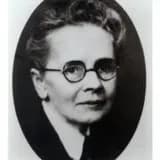
Morgan opened her own architectural office in San Francisco's financial district, one of the earliest woman-led architecture practices in the city.
Shortly after receiving her state license, on April 1, 1904, Julia Morgan opened her own independent architectural office in San Francisco's financial district, establishing one of the very first woman-led architectural practices in the city and among the earliest in the United States.
This was an extraordinarily bold move for a woman in the early twentieth century, when the vast majority of women working in architecture (the few who existed) did so as draftspersons or assistants within male-led firms, rarely receiving independent recognition or the ability to contract directly with clients. By establishing her own practice, Morgan positioned herself to accept commissions under her own name, retain creative and financial control over her projects, and build a reputation entirely on her own merits.
Her early clients often came through personal and social networks, including connections made through women's organizations and her family's social circles. Notably, she gained early recognition for her design of the Bell Tower (El Campanil) at Mills College, a women's college, which helped establish her credibility as a structural engineer following its survival of the 1906 San Francisco earthquake essentially undamaged—a powerful early testament to her engineering training.
Over the following decades, this office would grow into one of the most productive architectural practices in California history, eventually employing dozens of draftspeople and producing designs for clients ranging from wealthy individuals to civic and religious institutions, culminating in her legendary collaboration with William Randolph Hearst.