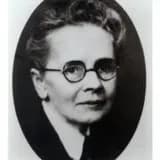
Morgan became the first woman to earn a B.S. in civil engineering from the University of California, Berkeley.
On May 16, 1894, Julia Morgan received her Bachelor of Science degree in civil engineering from the University of California, Berkeley, becoming the first woman to earn an engineering degree from the institution.
At the time, engineering programs were almost exclusively male domains, and Morgan faced significant social and institutional resistance simply by enrolling. She persevered through a rigorous technical curriculum, often as the only woman in her classes, studying under professor Bernard Maybeck, who recognized her talent and encouraged her toward architecture as a career path—an unusual suggestion given that formal architectural education for women was virtually nonexistent in the United States at the time.
This achievement was foundational to everything that followed in Morgan's career. Her engineering training gave her a deep technical understanding of structural systems, materials, and construction methods that would distinguish her architectural work throughout her career, particularly in seismically active California where structural integrity was paramount.
Morgan's success at Berkeley demonstrated that women could master rigorous technical disciplines, challenging prevailing assumptions about women's intellectual capacities in STEM fields. It also opened the door for her subsequent pursuit of formal architectural training in Paris, since her engineering credentials helped establish her qualifications when she later sought admission to the École des Beaux-Arts.