← All women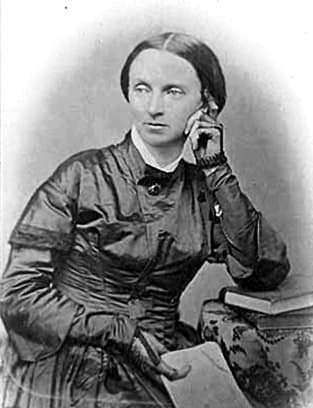
American · Activism · Literature · Politics
Jane Swisshelm
December 6, 1815 – July 22, 1884
Early Life and Background
Jane Grey Cannon Swisshelm (December 6, 1815 – July 22, 1884) was born in Pittsburgh, Pennsylvania, into a Scotch-Irish, artisan family.[2][3][9] Her father, Thomas Cannon, worked as a chair maker, and her mother, Marcy (or Mary) Scott Cannon, came from an Orthodox Calvinist community that profoundly shaped Jane’s religious and moral outlook.[4][12] Encyclopedia entries and biographical studies note that she spent part of her childhood in Wilkinsburg, near Pittsburgh, in a household marked by strict piety and, soon, economic strain.[4][5]
When Jane was about eight, her father died, leaving the family in financial difficulty.[3][5] To help support her mother and siblings, she took up sewing piecework and later taught school, experiences that gave her insight into the precarious economic position of women who lacked legal and financial autonomy.[5][13] Her formal schooling was limited to a brief period at Edgeworth Boarding School at Braddock’s Field, Pennsylvania, after which she was largely self-educated.[4]
Growing up in a context of Calvinist theology, modest means, and early responsibility, Swisshelm developed strong convictions about moral duty, individual conscience, and the injustices embedded in social and legal structures. Later scholars emphasize that these formative experiences—economic insecurity, religious rigor, and gendered constraints—helped shape her eventual commitment to abolition and women’s rights.[10][17]
Marriage, Move to Kentucky, and Awakening to Slavery
In 1836, at age twenty, Jane Cannon married James Swisshelm, a farmer from a relatively prosperous family.[4][5][11] Soon after, the couple moved to Louisville, Kentucky, where Jane encountered slavery directly for the first time.[5][11][13] Living amidst a slaveholding society, and reportedly seeing enslaved people owned by her husband’s relatives, forced her to confront the realities of bondage beyond abstract moral debate.
Biographers describe her marriage as deeply unhappy and unconventional. Jane was determined to maintain her moral and intellectual independence in a relationship defined legally and socially by her husband’s authority.[10][17] The common-law doctrine of coverture, which gave husbands control over wives’ property and earnings, became a persistent target of her anger.
By 1838, she had begun speaking and writing publicly against slavery, a turning point that historians mark as the consolidation of her antislavery identity.[5][13] In Kentucky and later back in Pennsylvania, she developed arguments that linked the oppression of enslaved people and the legal subordination of wives, laying an intellectual foundation for her later reform journalism.[5][17]
Early Writing and Entry into Journalism
Swisshelm’s sustained engagement with public writing dates from 1836, when she began composing short stories, poems, and essays for local newspapers.[5][12][13] Initially, these pieces appeared in Pittsburgh-area journals and reflected her religious and moral concerns, but they quickly took on a more explicitly reformist edge as she confronted slavery and women’s legal disabilities.
Throughout the 1840s she contributed to antislavery and reform papers, including the Spirit of Liberty and other regional outlets.[5][19] She wrote against capital punishment, slavery, and the legal structures that rendered wives economically dependent on their husbands.[3][7][19] Her distinctive voice—combining moral absolutism, sharp wit, and personal anecdote—won her a growing readership.
These early writings are important because they mark her transition from private discontent to public advocacy. At a time when women were expected to speak only within domestic or religious spheres, Swisshelm seized the printed word as a means of confronting legislators, clergy, and slaveholders. Scholars of women’s journalism note that she was among a small but significant cohort of early nineteenth-century women who entered the public press as political commentators rather than merely as authors of moral or domestic essays.[10][17]
Founding the Pittsburgh Saturday Visiter
In 1848, Swisshelm took a decisive step by founding the Pittsburgh Saturday Visiter, an antislavery and women’s rights newspaper that she owned and edited.[3][5][7][19] Heritage organizations and biographers emphasize that she did so partly in response to frustration with male-controlled papers that limited women’s voices or softened abolitionist arguments.[19]
The Visiter quickly became known for its uncompromising attacks on slavery and its advocacy for married women’s property rights. Swisshelm editorialized against the Fugitive Slave Law, denounced proslavery clergy, and argued that the law should recognize married women as independent property holders.[3][7][19] Her essays often drew on her own difficult marriage as evidence of the harms caused by coverture.
Historians treat the founding of the Visiter as a genuine barrier-breaking moment. A woman not only wrote for but created and managed her own reform newspaper, taking responsibility for editorial decisions and business operations alike.[2][3][19] In the male-dominated world of the mid-nineteenth-century press, this was an extraordinary assertion of female authority.
The paper’s circulation extended beyond Pittsburgh, with abolitionist presses reprinting her articles and reformers reading her work across several states.[3][7] Through the Visiter, Swisshelm established herself as an influential voice in the intersecting movements for abolition and women’s rights.
Campaigns for Married Women’s Property Rights
One of Swisshelm’s most sustained campaigns involved the legal status of married women’s property. In letters and editorials published in Pittsburgh papers, including the Pittsburgh Commercial Journal and her own Saturday Visiter, she criticized laws that gave husbands exclusive control over marital assets.[7]
She famously wrote that “all they both have and all they can acquire are his, and only his, to dispense as he sees fit,” highlighting the injustice of a legal system that rendered wives economically powerless.[7] Axios’s synthesis of her Pittsburgh activism notes that by 1857 her writing contributed significantly to public debate over married women’s property rights in Pennsylvania.[15]
While Swisshelm was not the sole architect of subsequent legal reforms, her persistent criticism helped keep the issue before the public and legislators. She framed property rights as essential to women’s moral agency and capacity to act as full citizens, linking economic autonomy with broader claims to political participation.[7][15][17]
National Journalism and the New York Tribune
By 1850, Swisshelm had joined Horace Greeley’s New York Tribune as a journalist, becoming one of the first women employed by a major American newspaper in a political reporting role.[1][5][7][10] From Washington, D.C., she covered congressional debates and national politics, offering commentary informed by her Radical antislavery views.
Her appointment to the Tribune’s staff represented a major professional advancement. Greeley, known for his reformist leanings, valued her sharp analysis and moral conviction. Time magazine and other modern accounts identify her as one of the earliest women political journalists in the United States.[7]
Swisshelm used her Tribune platform to critique compromise measures over slavery and to attack prominent figures who, in her view, betrayed antislavery principles. Her criticism of Senator Daniel Webster, whom she accused of abandoning his earlier opposition to slavery’s expansion, eventually led to controversy; one article was considered libelous, and her relationship with the Tribune was strained.[5]
First Woman in the U.S. Senate Press Gallery
On April 17, 1850, Swisshelm entered the U.S. Senate press gallery as a Tribune correspondent, becoming the first woman known to sit there.[7][19] This moment, documented in biographical and journalistic accounts, is widely cited as a landmark in the history of women’s political journalism.
The Senate press gallery had operated as a male preserve, symbolically and practically connecting the legislative chamber to the broader public through newspaper reporting. By taking her seat among male reporters, Swisshelm challenged both institutional norms and cultural assumptions about women’s place in politics.
Her presence generated unease among some senators and fellow journalists, but she persisted, using the vantage point to write about debates over slavery, sectional compromise, and national policy.[1][5][10] This barrier-breaking act helped open the way, slowly, for other women to enter political reporting and to claim professional authority in the heart of American governance.
Move to Minnesota and Editorial Battles
After her time in Washington, Swisshelm moved west and became a central figure in Minnesota’s emerging press and politics. In St. Cloud she edited the St. Cloud Visiter and other papers, continuing her dual focus on abolition and women’s rights.[1][5][9][10]
Her uncompromising editorials drew the ire of local Democratic politicians and proslavery sympathizers. At one point, opponents broke into her newspaper office and destroyed her press and type, an act of violence aimed at silencing her.[5][10] She publicly condemned the attack and resumed publishing, illustrating the risks faced by abolitionist editors and the resilience required to continue.
Scholar Jane E. Schultz and other historians note that Swisshelm was among the founders of the Minnesota Republican Party, helping organize antislavery and reform-minded voters in the region.[17] Her journalism in Minnesota thus contributed not only to public debates but also to party-building in a new state.
Civil War Service and The Reconstructionist
With the outbreak of the Civil War, Swisshelm returned to Washington, D.C., where she combined journalism with direct wartime service. She served as one of the first female clerks in the office of the quartermaster general, an administrative role vital to the Union Army’s logistics.[5] At the same time, she worked as a nurse, tending wounded soldiers in hospitals and camps around the capital.[5][17]
In 1861 she launched The Reconstructionist, a newspaper dedicated to the intertwined causes of abolition, Radical Republican politics, and women’s rights.[5][7] Through this paper she argued for uncompromising prosecution of the war and for a postwar settlement that would guarantee full civil rights to formerly enslaved people.
Her wartime experiences—seeing the suffering of soldiers and the costs of the conflict—reinforced her insistence that the Union’s victory must lead to deep structural change. Scholars emphasize that her perspective anticipated Radical Reconstruction, pressing for strong federal intervention to reshape southern society and secure equal rights.[17]
Reconstruction-Era Activism and Later Journalism
After the war, Swisshelm continued to write and lecture, using The Reconstructionist and other outlets to criticize lenient policies toward former Confederates and to advocate for civil rights and women’s reforms.[5][17] She opposed efforts to roll back wartime gains and argued that the sacrifices of soldiers required a thorough dismantling of slavery’s legacy.
Her outspoken stance made her a target. In 1865, an arsonist attempted to set fire to her home and office, reportedly in retaliation for her Radical politics.[5] The incident led her to give up her role as a newspaper editor, though she continued to work as a freelance journalist and public speaker.
Throughout the Reconstruction era, Swisshelm remained critical of any retreat from strong federal action. She insisted that true reconstruction must address both race and gender, continuing to press for women’s property rights, custody protections, and political participation.[4][17]
Major Works: Reminiscences of Half a Century
In her later years, Swisshelm turned to autobiographical writing. Her memoir, Reminiscences of Half a Century, was published around 1880–1881 and is frequently cited in biographical references.[4][10][11] In it she recounted her childhood, marriage, journalistic career, abolitionist activism, and encounters with major political figures.
The memoir serves several important functions. It documents a woman’s perspective on nineteenth-century political and social movements; it offers insight into the personal costs of a reformer’s life; and it preserves her own interpretation of controversial episodes, including her criticisms of Daniel Webster and conflicts with party leaders.[10][17]
Literary historians note that the work also contributes to the broader genre of women’s autobiographical writing, in which female authors claim authority to narrate public as well as private experience.[16] Swisshelm’s self-portrait underscores her refusal to separate domestic life from political commitments.
Personal Life and Separation from Her Husband
Swisshelm’s personal life was as unconventional as her public career. Although she married James Swisshelm in 1836, she spent much of her adult life living apart from him.[4][10][17] Their marriage, marked by conflict over property, autonomy, and moral authority, became a case study in her writings on women’s legal rights.
Encyclopedia entries note that the marriage effectively ended by the mid-1850s; some sources give 1857 as the date of divorce or formal separation.[4] Swisshelm’s insistence on controlling her earnings and property ran against legal norms and family expectations, but she held firm, even when it meant social censure.
She had one surviving child, Mary Henrietta Swisshelm, born in 1851 or 1852, whom she supported while pursuing her demanding editorial and activist work.[4][5] Balancing motherhood with national journalism was itself a challenge, and her memoir reflects the tensions she felt between the roles of dutiful wife, mother, and public reformer.[10][17]
Awards, Honours, and Contemporary Recognition
Swisshelm did not receive formal awards in the modern sense, but she was recognized in her own time as a prominent abolitionist and reform journalist. Her newspapers were widely discussed, praised by fellow abolitionists and attacked by opponents.[2][3][10]
By the late nineteenth century, reference works and historical accounts described her as one of America’s notable women editors and anti-slavery advocates.[2][4][16] The continued republication of her articles and citation of her memoir reflected a degree of respect, even among those who disagreed with her uncompromising tone.
Legacy and Historical Impact
Modern historians characterize Jane Swisshelm as "one of the most important journalists of the nineteenth century" in the realm of reform.[10][17] Her legacy rests on several intertwined contributions:
- Women in Journalism: She founded and edited her own newspapers, becoming one of the earliest women to exercise full editorial control over political papers. Her presence in the Senate press gallery and her employment by the New York Tribune helped open professional spaces to women journalists.[1][7][19]
- Abolitionist Press: Through the Pittsburgh Saturday Visiter, the St. Cloud Visiter, and The Reconstructionist, she amplified abolitionist arguments, attacked proslavery politicians, and contributed to the moral climate that made wartime emancipation possible.[3][5][10][17]
- Women’s Legal Rights: Her persistent critiques of married women’s property laws and custody arrangements helped popularize these issues and linked them to broader feminist demands for economic and political equality.[7][15][17]
- Republican Party and Reconstruction: In Minnesota and later in Washington, she aligned with Radical Republicans, helping shape party debates and public opinion on Reconstruction and civil rights.[5][17]
Scholars note that Swisshelm’s style was often abrasive and uncompromising. She alienated some allies and drew criticism for personal attacks. Yet this very intensity made her a powerful voice in movements that required moral clarity and confrontation.[10][17]
Recent scholarship, including a full-length biography published by the University of North Carolina Press, situates her within a broader narrative of "unconventional" women who negotiated the tensions between domestic expectations and public ambition.[17][18] She is increasingly recognized as a key figure in the history of women’s participation in journalism, politics, and social reform.
Later Life and Death
In her final decades, Swisshelm continued to write and speak, though without the institutional backing of her own newspapers. She sought to make a living as a freelance journalist and lecturer, and she devoted considerable energy to writing Reminiscences of Half a Century.[5][10]
By 1880, biographical accounts indicate that she was still remembered in historical and journalistic writing as a pioneering abolitionist editor and women’s rights advocate.[4][5][10] Her autobiography helped secure that reputation by offering a detailed account of her life and work.
Swisshelm died on July 22, 1884, in Swissvale, Pennsylvania, at the age of sixty-eight.[2][3][13][16] She was buried in Pennsylvania, the state where her career had begun with the Pittsburgh Saturday Visiter and where she had first taken up the cause of married women’s property rights.
Her death marked the close of a life that spanned the Jacksonian era, the rise of the Republican Party, the Civil War, and Reconstruction. Subsequent generations of women journalists, suffragists, and civil rights advocates built on the foundations she helped lay, even when they did not know her name. Today, historical and scholarly works increasingly recover her story, placing Jane Grey Swisshelm at the center of nineteenth-century battles over slavery, gender, and the power of the press.[2][10][17]
Dated achievements
15 indexed.
- Dec061815Activism
Birth of Jane Grey Cannon Swisshelm
Birth of Jane Grey Cannon Swisshelm in Pittsburgh, Pennsylvania, on December 6, 1815.
View details Britannica – Jane Grey Swisshelm - Jan011836Activism
Early reform writing begins
By January 1, 1836, Swisshelm had begun her public reform writing and journalism career.