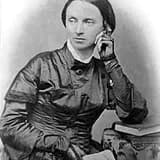
By January 1, 1838, Swisshelm had become publicly involved in antislavery advocacy and writing.
On January 1, 1838, biographical accounts place Jane Swisshelm firmly within organized antislavery advocacy, marking a deepening of her reform commitments beyond women’s issues. This year is treated as the point by which her abolitionist identity was clearly established.
After moving to Louisville, Kentucky, in the late 1830s, Swisshelm witnessed slavery firsthand and began speaking and writing against the institution with growing boldness.[5][13] Minnesota Historical Society’s MNopedia identifies 1838 as a key year in which her antislavery engagement and public writing were underway, laying the foundation for her later work as an abolitionist editor.[1][5]
The significance of this dated milestone lies in the convergence of personal experience and political activism. Encountering slavery within her own extended family’s milieu pushed Swisshelm from moral discomfort to outspoken denunciation, and her writings began to connect women’s subordination to the broader system of racial oppression.
By marking 1838 as an early antislavery benchmark, historians show how Swisshelm joined a growing but still contested northern movement against slavery. Her subsequent newspapers would make abolition a central agenda, but this year captures the formative moment when she chose confrontation rather than complicity, using journalism as her chief weapon.