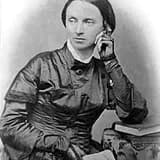
On April 17, 1850, Jane Swisshelm became the first woman to sit in the U.S. Senate press gallery.
On April 17, 1850, Jane Swisshelm became the first woman to sit in the U.S. Senate press gallery, breaking a highly visible gender barrier in national political journalism. This moment symbolized women’s contested entry into the core spaces of American governance.
Working as a correspondent for Horace Greeley’s New York Tribune, Swisshelm had come to Washington, D.C., to report on congressional debates.[1][5][7] Contemporary accounts and later historical analyses agree that on this date she took her place among male reporters in the Senate press gallery, a space that had effectively been reserved for men.[7][19]
Her presence provoked anxiety among some senators and journalists who saw the gallery as an extension of masculine political culture. Yet Greeley defended his decision to hire her, and Swisshelm used the vantage point to produce sharp commentary on slavery, compromise politics, and prominent figures such as Daniel Webster.[1][5][10]
This event is widely cited by historians and journalists as a genuine "first" for women in American political reporting.[7][19] It demonstrated that a woman could claim professional legitimacy in the nation’s legislative heart and helped challenge assumptions that politics and serious journalism were exclusively male domains.
In women’s and media history, April 17, 1850, stands as a landmark: Swisshelm’s seat in the Senate press gallery inaugurated a slow transformation that would, over generations, bring more women into political reporting and reshape the press’s gender dynamics.