← All women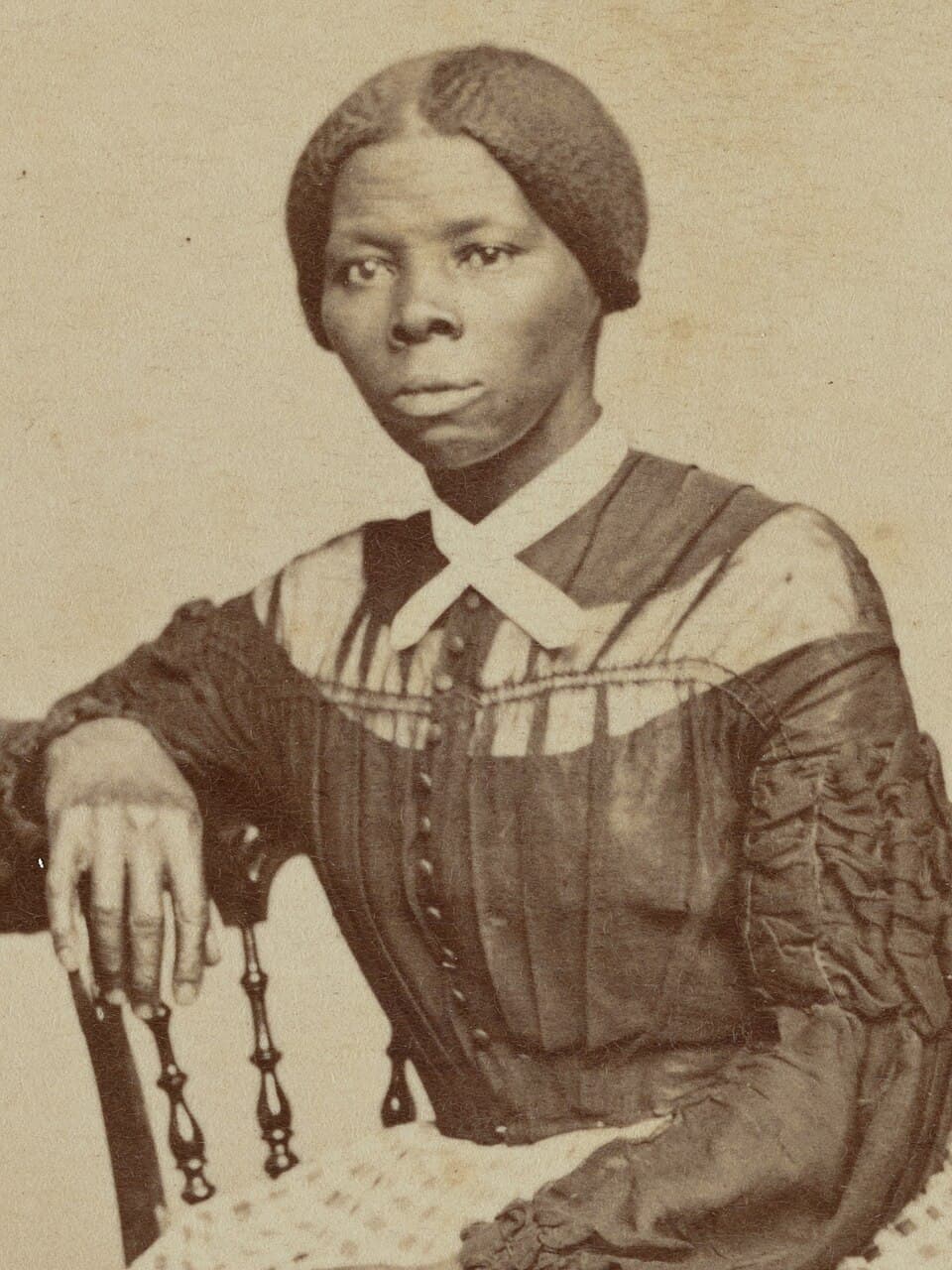
American · Activism · Politics
Harriet Tubman
March 1, 1822 – March 10, 1913
Early life and family background
Harriet Tubman was born into slavery in Dorchester County, Maryland, in March 1822. Born Araminta Ross to Harriet “Rit” Green Ross and Benjamin Ross, she was one of nine children in a family that lived under the constant threat of sale, forced labor, and separation. Tubman’s early life was shaped by the brutal realities of slavery on Maryland’s Eastern Shore, where enslaved children were expected to work from a young age and could be hired out or punished at the owner’s discretion.
As a child, Tubman experienced severe hardship, including physical violence and repeated trauma. A wound to the head, caused when an overseer struck her, left her with lifelong health problems and periods of sudden sleeping spells that later became part of her legend. These injuries did not diminish her resolve; instead, they became part of the formative experience that shaped her determination to resist slavery and protect others.
Tubman’s family ties deeply influenced her later actions. Her parents, siblings, and extended kin formed the emotional center of her life, and much of her later work on the Underground Railroad was driven by a desire to rescue relatives as well as strangers. The family networks of the enslaved world were central to her identity and to the choices she made as an adult.
Escape from slavery and entry into abolitionism
In 1849, Tubman escaped from slavery in Maryland and reached Philadelphia, where she began life as a free woman. Her escape was not a single triumphant ending but the beginning of a new and dangerous chapter. Because escaped enslaved people were pursued under federal and state slave laws, freedom was precarious and required vigilance, mobility, and secrecy.
Shortly after her escape, Tubman learned that freedom meant little if family and friends remained enslaved. In December 1850, she made her first documented rescue mission along the Underground Railroad, guiding enslaved people from Maryland toward freedom. Over roughly the next decade, she would make about 13 rescue trips and help bring approximately 70 people to safety. Her missions earned her the nickname “Moses” among those she helped, a tribute to her role as deliverer.
Tubman’s work as a conductor on the Underground Railroad demanded extraordinary courage and strategic intelligence. She traveled at night, relied on a network of abolitionists and safe houses, and used disguise, timing, and local knowledge to evade capture. The risks were severe: slave catchers, bounty hunters, and the legal machinery of slavery all stood ready to punish her if she were found. Her success made her one of the most famous figures in the antislavery movement.
Civil War service and military leadership
During the Civil War, Tubman expanded her work from rescue missions to wartime service. In early 1862, she joined Union activities at Port Royal, South Carolina, where she worked as a nurse, cook, scout, and spy. Her experience, local knowledge, and network of intelligence made her valuable to Union commanders who needed information about Confederate movements and geography in the South.
Her most famous wartime accomplishment came in June 1863, when she helped plan and lead the Combahee River Raid in South Carolina. On June 1, she accompanied Union troops under Colonel James Montgomery as the raid began; by June 2, the operation concluded with the destruction of Confederate supplies and the liberation of more than 700 enslaved people. Tubman is recognized as the first woman in American military history to lead an armed expedition or raid, a milestone that challenged both racial and gender exclusions in wartime service.
The Combahee River Raid was more than a daring military act. It demonstrated that Black women could contribute directly to strategy, intelligence, and liberation in wartime. Tubman’s leadership bridged the worlds of abolition and military action, and her wartime service later became one of the strongest arguments for her place in the national historical canon.
Later life, philanthropy, and suffrage activism
After the war, Tubman did not retreat from public life. She remained committed to the welfare of formerly enslaved people, poor families, and the elderly. In Auburn, New York, she built a home and later established the Home for Aged & Indigent Negroes, reflecting her long-standing concern for care, dignity, and community support. Her philanthropy was especially notable because it emerged from a life in which she herself struggled financially despite her fame.
Tubman also supported the women’s suffrage movement. Although she was not always central to formal suffrage organizations, her life had already made a powerful argument for Black women’s political rights. She spoke publicly about justice and equality, and later generations have remembered her as both an abolitionist and a suffragist. Her work connected freedom from slavery with broader struggles for citizenship and recognition.
Her personal life included marriage to Nelson Davis, a Union veteran, in 1869. Tubman had no biological children, but she cared for relatives and for many people who regarded her as a maternal figure. The absence of children did not diminish her family role; rather, it widened her circle of responsibility to include an extended community of dependents, supporters, and those she rescued.
Honors, memorialization, and historical legacy
Tubman’s legacy grew steadily in the twentieth century. On June 3, 1944, the Liberty ship S.S. Harriet Tubman was launched, becoming the first Liberty ship named for a Black woman. On May 30, 1974, the Harriet Tubman Home for the Aged was designated a National Historic Landmark, preserving a tangible site of her philanthropy. On February 1, 1978, the U.S. Postal Service issued a Harriet Tubman stamp as the first in its Black Heritage Series, and on June 29, 1995, it issued a second stamp in her honor.
In the twenty-first century, Tubman remained central to public memory. On April 20, 2016, the U.S. Treasury announced that her portrait would appear on the redesigned $20 bill, a symbolic recognition of her importance in American history and a landmark in the long struggle to place Black women on national currency. Although the redesign was delayed, the announcement itself signaled Tubman’s extraordinary stature as a national icon.
Historians remember Tubman as an Underground Railroad conductor, Civil War scout and spy, humanitarian, and symbol of Black women’s resistance to slavery and racial hierarchy. Her life illustrates the intersection of race, gender, labor, and political struggle in nineteenth-century America. She overcame legal bondage, violent repression, and exclusion from public power to become one of the most celebrated figures in U.S. history. Tubman died on March 10, 1913, in Auburn, New York, but her legacy continues to shape historical scholarship, public commemoration, and popular memory.
Dated achievements
10 indexed.
- Mar011822Science
Birth in slavery in Dorchester County, Maryland
Born into slavery as Araminta "Minty" Ross in Dorchester County, Maryland; March 1, 1822 is the conventional commemorative birth date.
View details National Park Service: Harriet Tubman - Oct031849Science
Reward advertisement issued for Tubman and her brothers
Eliza Brodess published a $100 reward notice for the capture of "Minty" (Tubman) and her brothers Ben and Harry if found outside Maryland.