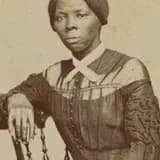
Eliza Brodess published a $100 reward notice for the capture of "Minty" (Tubman) and her brothers Ben and Harry if found outside Maryland.
On October 3, 1849, Eliza Brodess, the widow who claimed ownership of Harriet Tubman, published a runaway advertisement offering a $100 reward each for the capture of "Minty" and her brothers Ben and Harry if they were found outside the state of Maryland. This notice is one of the few surviving contemporary documents that directly names Tubman during her escape period and provides crucial documentary evidence of the timeline of her flight from bondage.
The advertisement reflects the broader legal and economic apparatus of American slavery, in which enslaved people were treated as property to be tracked, recovered, and re-enslaved through networks of slave catchers, advertisements, and the legal system. Such notices were common throughout the antebellum South and were a primary tool used by enslavers to recapture escapees.
Tubman successfully evaded capture, making her way roughly 90 miles north to Philadelphia and freedom, guided by the Underground Railroad network of safe houses and abolitionist sympathizers. This advertisement stands as a historical marker of her early act of self-liberation, later contrasted powerfully with her subsequent decision to return to the South repeatedly to free others despite the risk of exactly this kind of bounty being placed on her.