← All women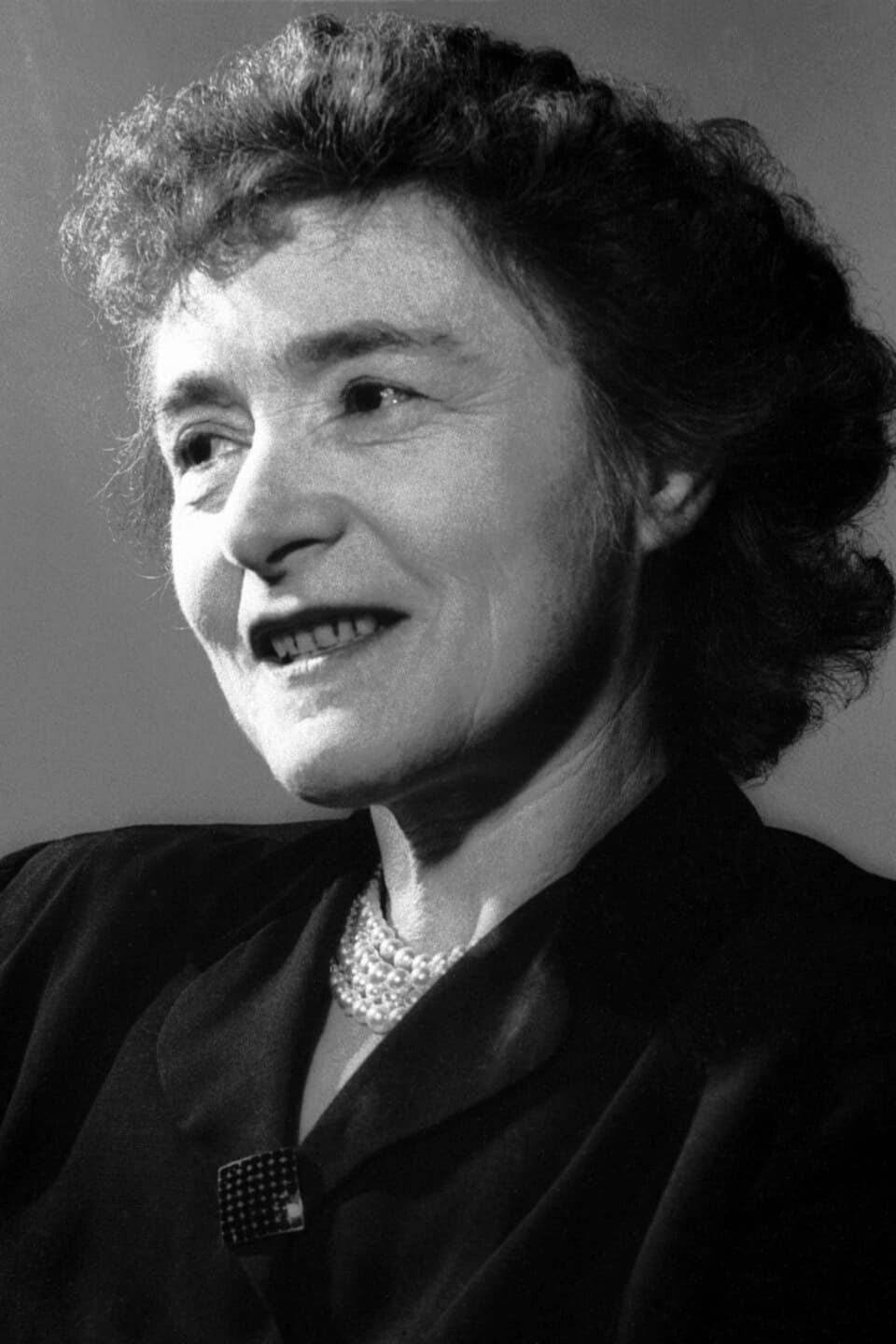
Austrian, American · Science · Medicine
Gerty Radnitz-Cori
August 15, 1896 – October 26, 1957
Early Life and Background
Gerty Theresa Radnitz, later known as Gerty Theresa Cori, was born on 15 August 1896 in Prague, then part of the Austro‑Hungarian Empire and today in the Czech Republic. She was the eldest of three daughters in an upper‑middle‑class Jewish family. Her father, Otto Radnitz, was a chemist who managed a sugar refinery, and her mother, Martha Neustadt, supported literary and intellectual interests.[1][2][8]
Growing up in Prague exposed Gerty to a cosmopolitan environment of Czech, German, and Jewish cultures and to the city’s strong scientific and medical traditions. Her father’s work in the sugar industry and chemistry likely contributed to her early interest in science; later accounts emphasize that she showed an aptitude for mathematics and the natural sciences from a young age.[2][8] Despite prevailing social expectations that middle‑class girls pursue domestic roles, her family allowed her to obtain a rigorous education.
As a teenager, Gerty attended a girls’ gymnasium and then qualified for entrance to medical school—still unusual for women in the early twentieth century. The backdrop to her formative years included World War I, the disintegration of the Austro‑Hungarian Empire, and rising antisemitism in Central Europe, conditions that shaped both her opportunities and later decisions to leave Europe.[2][9]
Medical Education and Early Career
Gerty Radnitz enrolled at the German University of Prague to study medicine, one of a small number of women in her cohort. She specialized in biochemistry and met fellow medical student Carl Ferdinand Cori, with whom she began an enduring scientific and personal partnership.[1][2][12] As students they co‑authored their first scientific paper, indicating that Gerty participated as an intellectual collaborator rather than merely an assistant.[12]
In 1920, Gerty earned her medical degree (M.D.) from the German University of Prague.[2][7] Around the same time, and before her marriage, she converted from Judaism to Catholicism, a decision influenced by family pressures and the social realities of interfaith marriage and antisemitism.[1][7] Later, biographers and Jewish women’s organizations would nonetheless emphasize her Jewish origins and treat her as part of Jewish women’s scientific history.[3][12]
That same year she married Carl Cori in Vienna, formalizing their partnership.[2] After their internships in Europe, the couple sought positions that would allow serious laboratory research. Prospects for Jewish scientists and for women were limited in post‑war Central Europe, and the political climate was increasingly unstable, prompting the Coris to consider emigration.[1][2]
Emigration to the United States and Research Beginnings
In 1922, Gerty and Carl Cori moved to the United States to work at the State Institute for the Study of Malignant Diseases in Buffalo, New York, later known as Roswell Park Comprehensive Cancer Center.[2][7] They arrived on 30 June 1922, beginning a new phase of their careers in American biomedical research.[2]
At Buffalo, the Coris shifted from clinical medicine to laboratory investigations of metabolism, focusing initially on blood disorders and cancer but soon becoming deeply interested in carbohydrate metabolism and the chemistry of glycogen.[4][8] Institutional practices reflected contemporary gender biases: Carl was appointed to a higher‑ranking position, while Gerty held a lower title and salary despite equivalent training.[4] Nevertheless, she pursued independent experiments and analysis within their joint program.
In 1923, Gerty published her first scientific paper in the United States, titled “The Influence of Thyroid Extract and Thyroxine on the Rate of Multiplication of Paramecia.”[11] This work on endocrine influences on cell division demonstrated her capacity to design experiments and interpret complex biological processes. It also signaled her transition from medical student to an established researcher working under her own name.
Elucidating Carbohydrate Metabolism: The Cori Cycle
Throughout the 1920s, the Coris turned their attention increasingly toward the biochemical pathways by which the body stores, mobilizes, and uses glucose. They were especially interested in glycogen, a branched polysaccharide that serves as a storage form of glucose in liver and muscle.[2][4] Using animal models, tissue extracts, and emerging enzymology techniques, they investigated how glycogen is broken down during muscular activity and resynthesized afterward.
In 1929, they proposed a comprehensive theory of carbohydrate metabolism that described the cycle in which glucose in the muscles is converted to lactic acid, transported to the liver, reconverted to glycogen, and ultimately transformed back into glucose for energy use. This pathway became known as the Cori cycle in their honor.[2][4][11] The Cori cycle clarified how the body manages energy during exercise and recovery and explained the interplay between muscle and liver in maintaining blood glucose levels.
This work required patient biochemical fractionation and enzymatic assays at a time when many of the relevant enzymes and intermediates were unknown. Gerty played a crucial role in identifying biochemical fractions and interpreting metabolic patterns, often credited for her meticulous experimental technique and insight.[8] Their 1929 description would later be recognized as a key step leading to the Nobel Prize.
Isolation of Glucose‑1‑Phosphate and Enzymatic Pathways
During the 1930s, the Coris’ research deepened into systematic mapping of the enzymes and intermediates involved in glycogen metabolism. Their investigations showed how glycogen is phosphorylated and dephosphorylated, how glucose enters and leaves glycogen stores, and how these processes interface with glycolysis.[4][8][9]
In 1936, they isolated glucose‑1‑phosphate, the first time this compound had been obtained and characterized. The molecule soon became known as the Cori ester.[4][8][11] They demonstrated that glucose‑1‑phosphate is a key intermediate in glycogenolysis (breakdown of glycogen) and glycolysis (the metabolic pathway that converts glucose to pyruvate), and that its formation is catalyzed by the enzyme phosphorylase.
By establishing the role of glucose‑1‑phosphate and identifying enzymes such as phosphorylase and phosphoglucomutase, Gerty and Carl delineated the enzymatic pathway by which glycogen is converted to glucose and vice versa.[4][9] These pathways underlie modern understanding of energy metabolism and are central to the study of diabetes, muscle physiology, and metabolic disorders.
Gerty’s contributions in these years extended beyond technical work: she was involved in experimental design, interpretation, and writing. Despite this, she often remained in junior positions; only later would institutional recognition catch up with her scientific stature.[4][8]
Washington University in St. Louis and Glycogen Storage Diseases
In the late 1930s, the Coris accepted positions at Washington University School of Medicine in St. Louis, Missouri.[2][4] There they built a prominent biochemistry research program, mentoring many younger scientists who would themselves become influential figures in metabolism research.
During the late 1930s and early 1940s, Gerty’s research focused increasingly on glycogen storage diseases in children. She investigated patients with abnormal accumulation of glycogen in the liver and other tissues and analyzed their enzyme activity. Her work showed that distinct disease phenotypes corresponded to defects in specific enzymes within the glycogen metabolic pathway.[8][11]
This line of research led to the identification of several types of glycogen storage disease and helped establish the concept that a defect in a specific enzyme can cause a human genetic disease.[8] At a time when clinical genetics was just emerging, Gerty’s integration of biochemistry and clinical observation was pioneering. It transformed these conditions from mysterious clinical syndromes into disorders with defined biochemical bases and opened avenues for later diagnostic and therapeutic strategies.
Washington University initially accorded Carl higher status, reflecting gender conventions of the era. However, Gerty’s scientific achievements, publications, and growing reputation made it increasingly untenable to treat her as secondary. Her steady contributions to the department’s research and training programs also strengthened her institutional standing.
Promotion to Full Professor and Nobel Prize
In 1946, when Carl Cori became chair of the new biochemistry department at Washington University, Gerty Cori was promoted to full professor of biochemistry.[4][9] This appointment made her one of the very few women full professors in an American medical school at the time. The promotion acknowledged her long record of research, teaching, and mentorship and preceded her Nobel recognition by a year.
In 1947, the Nobel Committee awarded the Prize in Physiology or Medicine jointly to Carl Ferdinand Cori, Gerty Theresa Radnitz Cori, and Bernardo Alberto Houssay.[1][2][6] The citation honored the Coris “for their discovery of the course of the catalytic conversion of glycogen,” recognizing their elucidation of the enzymatic steps by which glycogen is broken down to lactic acid and resynthesized, and Houssay for his work on the role of pituitary hormones in glucose metabolism.[1][5]
Gerty’s Nobel made her the first woman ever to receive the Nobel Prize in Physiology or Medicine and the first American woman to receive a Nobel Prize in science.[2][4][8][11] She became only the third woman worldwide to win a science Nobel, following Marie Curie and Irène Joliot‑Curie.[2][6] On 10 December 1947, the Coris attended the Nobel ceremony in Stockholm, where they also became the first married couple to receive a Nobel Prize in a scientific field.[2][4]
Her status as a trailblazer extended beyond gender. Born Jewish, she is widely recognized as the first Jewish woman Nobel laureate, a symbolic milestone for a community that had suffered intense persecution and genocide in Europe.[2][3][8] The award brought global attention to her work and broke multiple barriers in the representation of women and Jewish scientists at the highest level of recognition.
Awards, Honors, and Recognition
Following the Nobel Prize, Gerty Cori received numerous honors. In 1948, she was elected to the American Philosophical Society, one of the United States’ oldest learned societies, becoming part of a small group of women members in the mid‑twentieth century.[3] She also received honorary degrees and was invited to lecture internationally on carbohydrate metabolism and metabolic diseases.[4][6]
Professional societies and institutions continued to acknowledge her contributions. Biographical memoirs and historical reviews highlight her central role in establishing modern enzymology of glycogen metabolism and in integrating biochemical pathways with clinical disease entities.[9] Although many honors were awarded without detailed day‑and‑month records in secondary sources, they collectively illustrate her standing as a leading figure in biochemistry and medicine.
Within Washington University, her achievements helped raise the profile of the biochemistry department and contributed to the institution’s emergence as a major center for metabolic and genetic research. Colleagues and students remembered her as an exacting but supportive mentor, particularly of younger scientists interested in bridging laboratory research and clinical practice.[4][8]
Personal Life
Gerty’s personal and professional lives were deeply intertwined. Her marriage to Carl Ferdinand Cori was a partnership of equals in science, though institutions often treated him as the senior figure. They had one son, Carl Thomas Cori, born in 1926, who later became a physician.[2] Balancing motherhood with full‑time laboratory research was exceptionally demanding in an era with few supports for working mothers, especially in academe.
Accounts of her personality portray Gerty as modest, hardworking, and intensely devoted to research. She often avoided public attention, letting her work speak through data and publications. At the same time, she valued teaching and took care to support promising students and junior colleagues, including women entering biochemistry and medicine.[4][8]
Her decision to convert to Catholicism before marriage and her subsequent life in the United States reflect complex negotiations of identity as a Jewish‑born woman scientist in a period of entrenched antisemitism and social expectations around religion and marriage. Later commemorations, especially within Jewish and women’s organizations, have emphasized her roots and the broader significance of her achievements for marginalized groups.[3][12]
Later Life, Illness, and Death
In the early 1950s, Gerty began to suffer from myelosclerosis, a serious bone marrow disorder. Despite increasing fatigue and limitations, she continued her research and remained active in mentoring students and collaborators.[1][7] Colleagues noted her determination to work as long as physically possible, even as the illness progressed.
On 26 October 1957, Gerty Cori died in St. Louis, Missouri, at age 61.[1][2][7] She retained her position as full professor of biochemistry at Washington University until her death.[7] Obituaries and memorial essays emphasized not only her scientific achievements but also the barriers she had overcome, including gender discrimination, immigrant status, and the challenges of being a Jewish‑born woman in science during the first half of the twentieth century.
Legacy and Historical Impact
Gerty Cori’s legacy is multifaceted. Scientifically, she is remembered for three core contributions: the establishment of the Cori cycle, the isolation of glucose‑1‑phosphate (Cori ester), and the discovery of key enzymes such as phosphorylase and phosphoglucomutase that mediate glycogenolysis and glycolysis.[4][9] These discoveries formed the backbone of modern carbohydrate metabolism and remain fundamental in biochemistry and physiology textbooks.
Her work on glycogen storage diseases showed that specific enzymatic defects underlie distinct human genetic diseases, helping to launch a paradigm in which metabolic disorders are understood at the level of enzyme function and biochemical pathways.[8] This conceptual shift has influenced the diagnosis and treatment of a wide range of inherited metabolic conditions.
In the history of women in science, Gerty Cori is emblematic of the first generation of women who penetrated the highest levels of scientific recognition. As the first woman Nobel laureate in Physiology or Medicine and the first American woman science Nobel laureate, she demonstrated that women could achieve ground‑breaking research within laboratory disciplines traditionally closed to them.[2][4][8][11] Her joint Nobel with Carl also showed that marital collaboration could be acknowledged as intellectual partnership.
Posthumously, numerous institutions and landmarks have been named in honor of Gerty and Carl Cori. A crater on the Moon, Cori, commemorates their contributions to science.[2][4] Research buildings, prizes, and lectureships at various universities and scientific societies bear their names, ensuring ongoing visibility for their work.[2][4][10] Exhibitions such as the U.S. National Library of Medicine’s Changing the Face of Medicine and biographical essays from organizations like the American Philosophical Society and Jewish Women’s Archive use her story to inspire new generations.[3][4][12]
Her life illustrates the intersection of gender, religion, migration, and scientific innovation in the twentieth century. As a Jewish‑born woman who became an immigrant scientist, a full professor in an American medical school, and a Nobel laureate, Gerty Cori’s trajectory encompasses many of the central themes in modern women’s history and the history of science. She remains a touchstone for discussions about the structural obstacles facing women and minorities in research and the importance of recognition for collaborative scientific work.
Dated achievements
9 indexed.
- Aug151896Science
Birth of Gerty Radnitz in Prague
Gerty Theresa Radnitz was born in Prague, then part of the Austro-Hungarian Empire, into a Jewish family.
View details Gerty Cori - Wikipedia - Aug051920Science
Marriage to Carl Ferdinand Cori
Gerty Radnitz married physician Carl Ferdinand Cori in Vienna, beginning a lifelong scientific partnership.