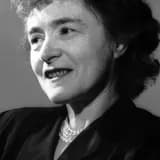
Gerty and Carl Cori became the first married couple to jointly receive a Nobel Prize in a scientific field.
When Gerty Cori received the Nobel Prize in Physiology or Medicine on December 10, 1947, alongside her husband and research partner Carl Ferdinand Cori, the couple became the first married couple in history to jointly receive a Nobel Prize in a scientific discipline.
This was a remarkable culmination of a research partnership that began in medical school in Prague and continued for nearly three decades, spanning emigration to the United States, years of institutional discrimination against Gerty's professional standing, and ultimately, sustained groundbreaking research into carbohydrate metabolism at Washington University in St. Louis.
The joint award highlighted an unusual model of scientific partnership for its era: rather than working in separate fields or having one partner's contributions subsumed by the other's, Gerty and Carl Cori published as genuine equals, with Gerty often serving as the primary experimentalist. Their recognition helped validate collaborative husband-wife research models in the sciences at a time when nepotism rules at many American universities barred spouses from working together in the same department.
Their shared Nobel Prize remains a touchstone in discussions of gender equity in scientific collaboration and is frequently cited alongside the earlier example of Marie and Pierre Curie as a model of successful, credited scientific partnership between spouses.