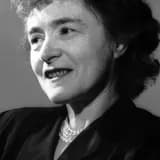
Gerty and Carl Cori arrived in the United States to pursue research careers, settling first in Buffalo, New York.
On June 30, 1922, Gerty and Carl Cori arrived in the United States, leaving behind the political and economic instability of post-World War I Europe, as well as rising antisemitism that limited their professional prospects. They settled in Buffalo, New York, where both took positions at the State Institute for the Study of Malignant Diseases (later renamed Roswell Park Comprehensive Cancer Center).
This transatlantic move was pivotal: it placed the Coris in an environment that, while still presenting gender-based obstacles for Gerty, ultimately allowed their research partnership to flourish. Gerty was initially relegated to lower-status research roles and paid a fraction of her husband's salary, and she was even warned that continuing to collaborate with Carl could jeopardize his career—a stark illustration of the institutional sexism women scientists faced in the early twentieth century.
Despite these constraints, the Buffalo years (1922–1931) proved scientifically fertile, allowing Gerty and Carl to begin the research into carbohydrate metabolism that would eventually earn them the Nobel Prize. Their emigration represents a broader historical pattern of scientific talent fleeing Europe in the interwar period, and it set the stage for Gerty Cori's eventual rise within the American scientific establishment, culminating in her groundbreaking 1947 Nobel Prize.