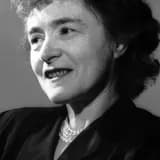
Gerty Cori became the first woman ever awarded the Nobel Prize in Physiology or Medicine and the first American woman Nobel laureate in science.
On December 10, 1947, at the Nobel Prize ceremony in Stockholm, Gerty Cori made history as the first woman ever to receive the Nobel Prize in Physiology or Medicine. She shared the prize with her husband, Carl Ferdinand Cori, and Argentine physiologist Bernardo Houssay, for their discovery of the mechanism by which glycogen is catalytically converted, work that unraveled fundamental processes of carbohydrate metabolism.
This achievement also made Gerty Cori the first American woman to win a Nobel Prize in any scientific field, and only the third woman worldwide to win a Nobel Prize in science, following Marie Curie (Physics, 1903; Chemistry, 1911) and Irène Joliot-Curie (Chemistry, 1935).
The recognition was extraordinary given the pervasive gender discrimination Cori had faced throughout her career—paid far less than male colleagues, denied faculty positions for years, and often relegated to lesser research roles despite being an equal intellectual partner to her husband. Her Nobel win represented a landmark moment not only for women in science but for the visibility of collaborative husband-wife research teams.
Her achievement paved the way for future generations of women scientists and remains one of the most cited milestones in the history of women's participation in the Nobel Prizes, cited by institutions worldwide as a symbol of perseverance against systemic barriers in twentieth-century science.