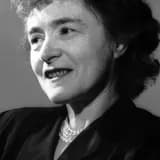
Gerty Cori died in St. Louis, Missouri, after a decade-long battle with myelosclerosis, a rare bone marrow disease.
Gerty Cori died on October 26, 1957, in St. Louis, Missouri, after enduring a long illness with myelosclerosis, a rare and progressive bone marrow disorder that had been diagnosed roughly a decade earlier, around the same time she received the Nobel Prize.
Remarkably, Cori continued her research work throughout much of her illness, publishing scientific papers even as her health declined. She and Carl continued their collaborative work at Washington University in St. Louis, where Carl had become chair of the university's new biochemistry department in 1946, with Gerty serving as full professor.
Her death at age 61 marked the end of a scientific partnership and career that had fundamentally reshaped the understanding of carbohydrate metabolism and enzymatic biochemistry. Gerty Cori left behind a profound legacy: she had trained and mentored numerous young scientists, several of whom went on to win Nobel Prizes themselves, and her pioneering achievements as a woman in science continued to inspire generations of researchers. In recognition of her enduring contributions, a lunar crater was later named in her honor, and numerous institutions established awards, professorships, and fellowships bearing her name to honor her legacy in biochemistry and to support women in science.