← All women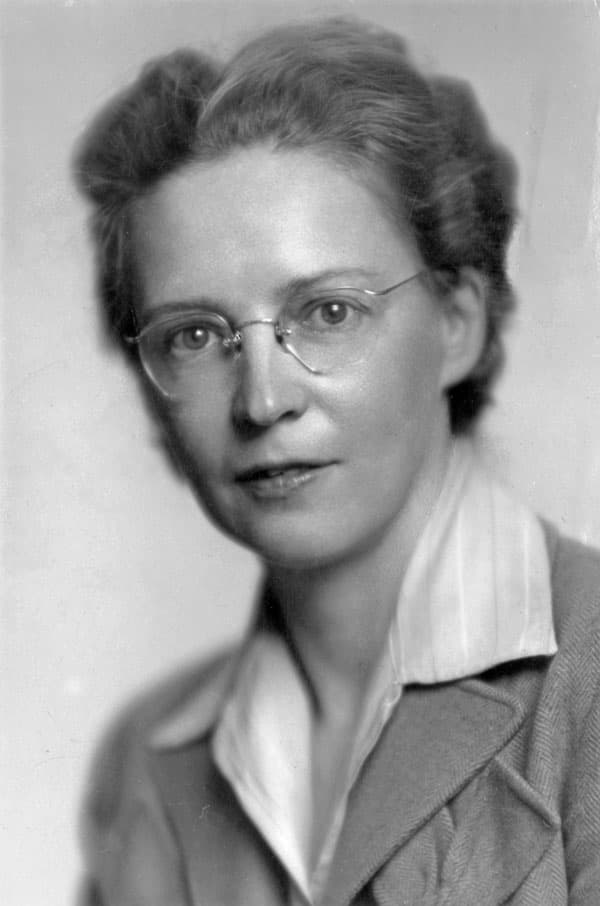
Canadian · Science · Aviation · Activism · Politics
Elsie MacGill
March 27, 1905 – November 4, 1980
Early life and education
Elizabeth Muriel Gregory MacGill, known throughout her life as Elsie MacGill, was born in Vancouver, British Columbia, in 1905. She grew up in a family that valued education and public service, and she developed an early interest in mechanics, mathematics, and the practical workings of the world around her. Those interests were unusual for girls of her era, when higher technical education was rarely encouraged and women were largely absent from engineering classrooms and professions.
MacGill studied in Vancouver before entering the University of Toronto, where she pursued electrical engineering. In 1927 she became the first woman in Canada to earn a bachelor’s degree in electrical engineering. The achievement was historically important not simply because it was a first, but because it occurred in a period when engineering institutions were overwhelmingly male and women had to overcome social skepticism, limited professional pathways, and often direct discouragement. Her degree established her credibility as a professional engineer and laid the foundation for her later work in aviation.
She then pursued graduate study at the University of Michigan, where in 1929 she became the first woman in North America, and likely the world, to earn a master’s degree in aeronautical engineering. Aeronautics was then an emerging and highly specialized field tied to rapid changes in transportation and military technology. Her success in this advanced discipline signaled the beginning of a career that would make her one of the most important women in the history of aviation engineering.
Early career and move into aeronautics
After completing her graduate work, MacGill entered the aviation industry at a time when the field was still developing its technical standards. Her early work included roles in aircraft engineering and design, and she soon built a reputation for strong analytical ability and practical problem-solving. In 1929 she also contracted polio, which left her paralyzed from the waist down. Rather than ending her professional life, the illness became another barrier she had to overcome in a society with few accommodations for disabled professionals, especially women in technical fields.
Despite those challenges, MacGill advanced steadily in aviation engineering. Her technical knowledge and leadership made her increasingly valuable to employers engaged in aircraft production. By the late 1930s she had entered senior engineering work in Canadian aviation, a remarkable rise for a woman in a profession that had almost no female leadership. Her career trajectory showed that expertise could overcome entrenched assumptions, even if only after repeated resistance.
Chief aeronautical engineer and wartime production
MacGill’s most celebrated professional chapter began in the late 1930s when she became the world’s first female chief aeronautical engineer at Canadian Car and Foundry in Fort William, Ontario. In that role, she was responsible for significant aircraft work, including the Maple Leaf Trainer II, often described as the first aircraft designed by a woman. Her appointment was a landmark in both Canadian industry and global aviation history because it placed a woman in a top technical position in a sector that was central to modern industrial and military power.
During the Second World War, MacGill became widely known as the “Queen of the Hurricanes” for overseeing the production of Hawker Hurricane fighter planes in Canada. These aircraft were crucial to Allied air power, and MacGill’s work involved adapting production and engineering methods to meet wartime demands, including modifications for cold-weather operation. She promoted efficient mass-production techniques and helped establish stronger standards for test reporting and quality control. Her wartime leadership made her one of the most important industrial engineers in Canada, and it linked her name permanently to the history of the Hurricane fighter.
What made this period especially significant was that MacGill was not simply participating in war production; she was directing it as a woman at the highest technical level. At a time when women were expected to contribute to the war effort in supportive or auxiliary roles, she occupied a position of genuine authority. That made her a visible symbol of what women could achieve when given access to professional responsibility.
Postwar aviation, international service, and public life
After the war, MacGill continued to shape aviation policy and engineering beyond factory production. In 1946 she became the first woman to serve as a technical advisor for the International Civil Aviation Organization, and in 1947 she became the first woman to chair a United Nations committee, the UN Stress Analysis Committee. These appointments reflected the breadth of her expertise and placed her in international forums where the future of aviation regulation and engineering standards was being debated.
Her work at ICAO and the United Nations mattered because it extended women’s participation from industrial engineering into global technical governance. In the postwar period, the world was building new international systems for civil aviation, safety, and technical regulation. MacGill’s presence in those settings showed that women could help shape the standards that governed modern air travel. Her leadership also helped create a precedent for later generations of women in international science and engineering organizations.
MacGill was also active in public affairs and women’s rights. She served as national president of the Canadian Federation of Business and Professional Women’s Clubs and sat on the Royal Commission on the Status of Women in Canada. In those roles, she spoke not only as a technical expert but as a feminist advocate committed to expanding women’s opportunities in education, employment, and public life. Her activism connected her engineering career to broader campaigns for equality, making her one of the most influential Canadian women of her generation.
Awards, honors, and recognition
MacGill received numerous honors for her work in engineering and public service. These included major professional medals and honorary degrees, along with national recognition for her contributions to Canada. She was appointed to the Order of Canada and was widely celebrated in both aviation and women’s history circles. Her recognition reflected the unusual combination of technical achievement, wartime service, and civic leadership that defined her career.
In later decades, MacGill’s legacy continued to grow. She was remembered in institutional histories, commemorative programs, aviation museums, and public education projects. Her life became an example used to illustrate the obstacles women faced in STEM and the impact of persistence, skill, and public advocacy. Recognition of her work has also expanded in the twenty-first century, with Canadian institutions emphasizing her role as a pioneer for women in engineering and aviation.
Personal life
MacGill’s personal life was shaped by both independence and long-term relationships that mattered to her career and public identity. Historical accounts note that she never married and had no children. She maintained close family and professional ties throughout her life, including important friendships and mentoring relationships within engineering, aviation, and women’s organizations.
Her paralysis from polio became a defining part of her later life, but it did not reduce her public stature. Instead, she continued to work, write, and advocate, showing that disability did not preclude leadership or influence. Her ability to continue a highly active professional and civic life after polio became part of the broader narrative of her resilience.
Legacy
Elsie MacGill is remembered as a trailblazer whose career combined technical brilliance, administrative leadership, and feminist activism. She was the first woman in Canada to earn a degree in electrical engineering, the first woman in the world to earn a master’s degree in aeronautical engineering, the first female chief aeronautical engineer in the world, and a major figure in wartime aircraft production. She was also one of the first women to hold senior technical posts in international aviation governance.
Her legacy matters because it shows how a single career can alter institutional expectations. MacGill did not merely succeed within existing structures; she helped change those structures by proving that women belonged in engineering design, production leadership, and international technical policy. Her example encouraged later generations of women engineers, pilots, and scientists, and her name continues to appear in Canadian commemorations of women in STEM.
In a historical period marked by rigid gender barriers, MacGill built a career that crossed several of them at once. She turned education into expertise, expertise into leadership, and leadership into advocacy. That combination is what makes her one of the most significant women in Canadian history and a lasting figure in the history of global aviation.
Death
Elsie MacGill died in Toronto on November 4, 1980. By the time of her death, she had already become a nationally recognized pioneer whose name stood for technical excellence and women’s advancement. Her papers, honors, and public memory continue to document a life that changed the boundaries of what women in engineering could do.
Dated achievements
9 indexed.
- Mar271905Aviation
Birth of Elsie MacGill in Vancouver
Born in Vancouver; Elsie MacGill would become Canada’s first woman electrical engineering graduate and a global pioneer in aeronautics.
View details Roberta Bondar Foundation — A Hurricane Force - Mar271905Aviation
Elsie MacGill is born
Birth of a future trailblazer whose career would produce multiple firsts in Canadian and world aviation history.