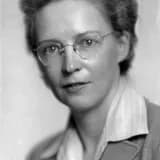
At Michigan, MacGill earned a master’s in aeronautical engineering, becoming the first woman in North America—and likely the world—to do so.
In 1929, Elsie MacGill became the first woman in North America, and likely the world, to earn a master’s degree in aeronautical engineering, completing her graduate studies at the University of Michigan. This was a remarkable accomplishment in an emerging technical field that was still defining its professional standards and training pathways. For a woman to enter, much less excel in, aeronautical engineering at this level was exceptionally rare.
MacGill’s graduate work mattered because aeronautics was rapidly becoming one of the most strategically important engineering fields of the twentieth century. Aircraft design, flight testing, and structural analysis would soon be central to both civilian aviation and military air power. Her mastery of the subject positioned her at the forefront of that transformation and helped establish her as a technical expert rather than a symbolic novelty.
The milestone also reflected the barriers she overcame: gender discrimination, limited precedent, and the expectation that engineering belonged to men. Her success proved that women could attain advanced specialization in a discipline tied to the most cutting-edge technologies of the era. It became one of the core reasons she is remembered as a trailblazer in aviation history and a foundational figure for women in engineering education.