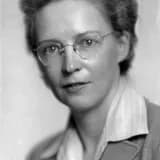
MacGill became the first woman in Canada to earn a bachelor’s degree in electrical engineering, a major breakthrough for women in STEM.
In 1927, Elsie MacGill became the first woman in Canada to earn a bachelor’s degree in electrical engineering from the University of Toronto. This was a landmark achievement in a field that had virtually no institutional precedent for women in Canada. Engineering education at the time was deeply gendered, and MacGill’s success required navigating an academic environment that was not designed to welcome her.
The importance of the degree extends beyond the credential itself. Electrical engineering provided MacGill with a rigorous technical foundation that later enabled her transition into aeronautical engineering, where she would make her most famous contributions. Her accomplishment demonstrated that women could excel at the highest levels of technical study and professional engineering, directly challenging assumptions that had excluded them from the discipline.
MacGill’s degree also carried symbolic power for Canadian women in science and engineering. It helped open a door that had been effectively shut, showing that a woman could not only enroll in an engineering program, but complete it with distinction. Her achievement became a foundational moment in the history of women in Canadian STEM and an early milestone in her broader career as an aircraft designer, administrator, and feminist advocate.