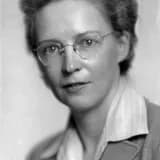
MacGill became the world’s first female chief aeronautical engineer and led major aircraft-design work at Canadian Car and Foundry.
In 1938, Elsie MacGill became the world’s first female chief aeronautical engineer when she took on a leading engineering role at Canadian Car and Foundry. That appointment marked a major break with industry norms, because aircraft engineering management was almost entirely male and women were rarely trusted with senior technical authority.
MacGill’s role was especially significant because it was not honorary. She was responsible for real design and production decisions in a rapidly expanding aviation industry. During this period she oversaw engineering work that included the Maple Leaf Trainer II, an aircraft widely described as the first airplane designed by a woman. The achievement demonstrated both her technical skill and her ability to lead in a production environment where precision, safety, and speed mattered enormously.
Her appointment and work were historically important because they proved that women could lead large-scale industrial aeronautics during a period of intense technological change. In the context of the 1930s, when professional advancement for women remained heavily constrained, MacGill’s position was a decisive statement about competence and authority. It expanded the imaginable role of women in aviation engineering and left a lasting legacy in Canadian industrial history.