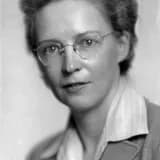
MacGill designed the Maple Leaf Trainer II, long described as the first aircraft entirely designed by a woman.
In 1938, Elsie MacGill is widely credited with designing the Maple Leaf Trainer II, an aircraft often described as the first plane designed entirely by a woman. The project is historically significant because it represented not just a personal technical achievement, but a rare instance in which a woman’s engineering work was recognized in a field almost exclusively controlled by men.
The trainer reflected the practical demands of its era. Aircraft design in the late 1930s required balancing structural integrity, manufacturability, and flight performance, all under the pressures of prewar and wartime aviation development. MacGill’s work demonstrated her ability to move from academic training into applied engineering, where design decisions had immediate consequences for pilots, manufacturers, and military users.
This accomplishment mattered as a barrier-breaking moment because it showed that women could produce original aircraft designs rather than merely contribute in supporting roles. In the context of interwar and wartime industry, where female expertise was often underestimated, the Maple Leaf Trainer II became an enduring symbol of women’s creative and technical authority in aviation history.