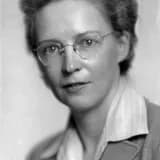
MacGill died in Toronto after a lifetime of barrier-breaking work in aviation, engineering, and women’s equality.
On November 4, 1980, Elsie MacGill died in Toronto, Ontario, ending a life that had reshaped the possibilities for women in engineering, aviation, and public life. Her death closed the career of a woman whose accomplishments had already become part of Canada’s national memory and whose influence continued to grow after her lifetime.
MacGill’s significance extended beyond technical innovation. She had helped build wartime aircraft production, participated in international aviation governance, and used her public platform to advocate for women’s equality. In an era when women were often denied leadership in both industry and policy, she became a prominent example of professional excellence paired with civic commitment. Her death therefore marked not simply the loss of a distinguished engineer, but the passing of a major feminist and institutional trailblazer.
Her legacy remained visible in the honors she received, the archival preservation of her papers, and the continuing public recognition of her role in Canadian STEM history. She is remembered as the “Queen of the Hurricanes,” for her work on Hurricane fighter production, but also as a pioneer whose life demonstrated that technical expertise and social change could be mutually reinforcing. Her death date is thus a sentinel point in the history of women’s contributions to modern aviation and engineering.