← All women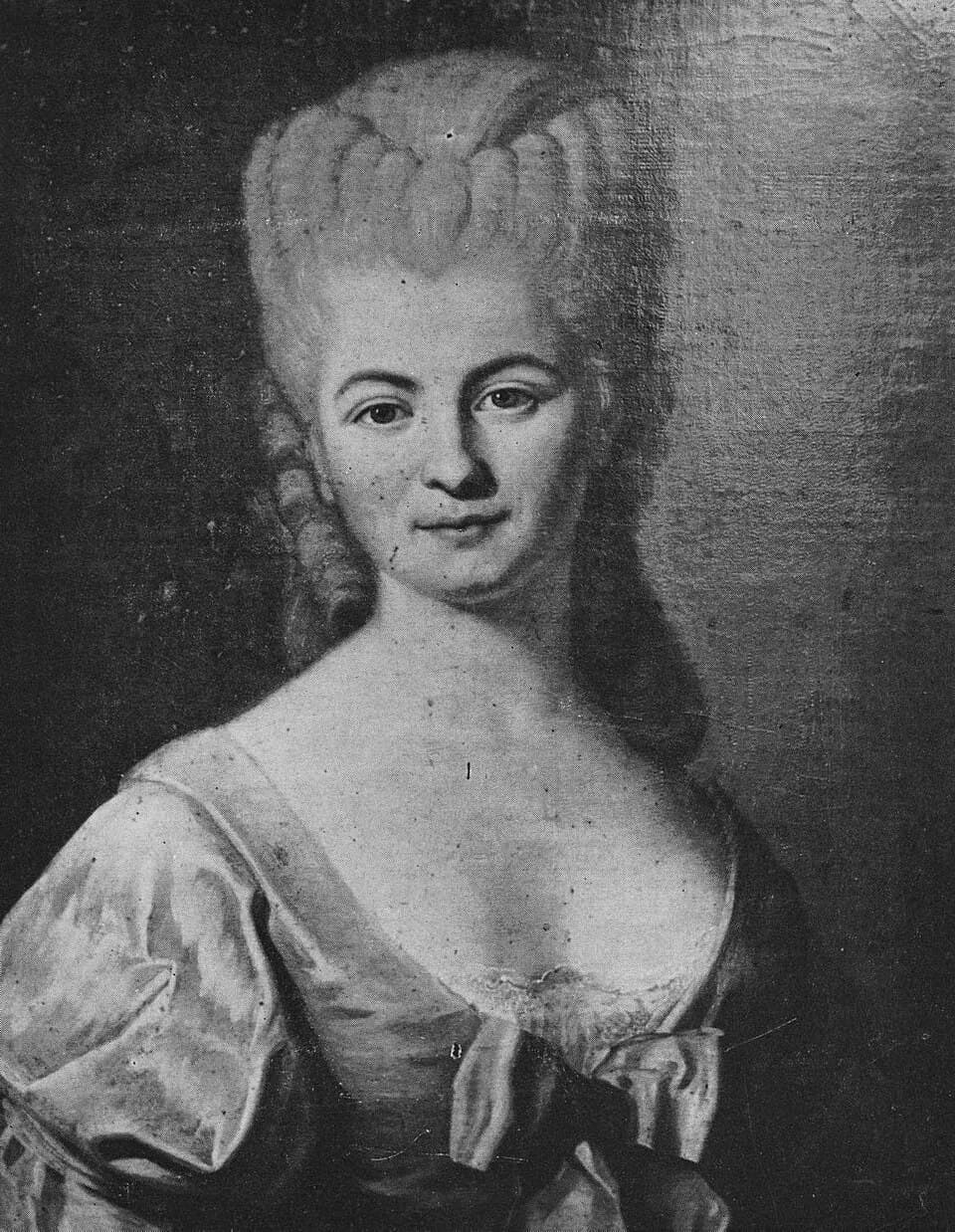
French · Science
Nicole-Reine Lepaute
January 5, 1723 – December 6, 1788
Early life and background
Nicole-Reine Lepaute was born Nicole-Reine Étable de la Brière on 5 January 1723 in Paris, in the Palais du Luxembourg or Petit Luxembourg, where her father worked in service to the household of Élisabeth d’Orléans. Her early life is not documented in great detail, but the surviving sources show that she grew up in an environment close to court life and urban intellectual culture. That setting did not make her career inevitable, but it exposed her to the world of technical skill, books, and elite patronage that later supported her scientific work.[1][2]
Unlike many later women scientists, Lepaute did not enter astronomy through a formal academic pathway. Eighteenth-century France offered women few institutional routes into advanced mathematics or astronomy, and scientific education was overwhelmingly male. Lepaute’s later achievement is therefore notable not only for its quality but also for the social barriers she overcame. She appears to have been largely self-taught, learning through reading and through the practical mathematical culture of horology and scientific calculation.[7][16]
Her name appears in several forms in the historical record, including Étable, Étable de la Brière, and Lepaute. Later sources sometimes also use erroneous variants such as Hortense Lepaute, which modern scholarship rejects. The multiplicity of names reflects the uneven documentation of women’s lives in early modern Europe and the challenges historians face in reconstructing them accurately.[1][5][13]
Marriage and entry into scientific work
On 27 August 1748, Lepaute married the clockmaker Jean-André Lepaute, who later became royal clockmaker. The marriage was important both personally and professionally, because horology required exact measurement, mathematical reasoning, and attention to celestial timekeeping. The workshop and household of a clockmaker formed a natural bridge between mechanical craft and astronomy, fields that were closely related in the eighteenth century.[7][9]
Her marriage did not simply define her as the wife of a technician. It placed her in a milieu where calculation had immediate practical value. Sources report that she calculated pendulum oscillation tables that were included in her husband’s Traité d’horlogerie in 1755, an early indication of her numerical competence. That contribution is especially important because it reveals that she was already participating in technical work before her major astronomical collaborations made her reputation visible.[7][9]
Lepaute and her husband worked in a period when women’s scholarly labor was often absorbed into the names of men. Many of her later achievements would be published under collaborative signatures or attributed primarily to male astronomers. Her career therefore belongs to a larger history of women whose expertise was essential but whose authorship had to be inferred from scattered references, institutional records, and later historical reconstruction.
Halley’s Comet and the rise of her reputation
Lepaute’s most famous scientific achievement came in 1757, when she joined Alexis Clairaut and Jérôme Lalande in the calculations that led to the prediction of the return of Halley’s Comet. This was one of the most celebrated astronomical problems of the century. The task required taking into account the gravitational influence of the planets, especially Jupiter and Saturn, and applying the new Newtonian framework to a difficult real-world case.[7][8][9]
The prediction was historically significant because it demonstrated the explanatory and predictive power of celestial mechanics. The comet’s return had long been uncertain, and its successful forecast helped establish that the heavens could be treated mathematically with great precision. Lepaute’s role was part of the intense numerical labor behind that success. Although later narratives often centered on Clairaut or Lalande, modern sources recognize Lepaute as a real contributor to the calculations, not merely a helper.[8][9][14]
On 13 March 1759, the comet was observed at perihelion, confirming the prediction. That observation transformed an intellectual exercise into a public scientific triumph. For Lepaute, the result validated years of collaborative computation and helped establish her place among the notable astronomers of pre-Revolutionary France. It also demonstrated that a woman could contribute meaningfully to one of the most technically demanding astronomical projects of the age, even if institutional recognition remained limited.[8][14]
Ephemerides, almanacs, and practical astronomy
After the Halley calculations, Lepaute continued to produce astronomical work of immediate practical value. From 1759 to 1783, she helped prepare almanacs and ephemerides, including material for La Connaissance des Temps, a major publication of the Academy of Sciences used by astronomers, navigators, and other readers who needed accurate celestial tables.[7][8][10]
Ephemerides were among the most labor-intensive products of Enlightenment science. They required detailed computations of the Sun, Moon, and planets, along with predictions of eclipses and other observable phenomena. Lepaute’s participation in this work shows that she was not a one-time collaborator but a sustained contributor to the infrastructure of astronomical knowledge. Her calculations supported practical needs well beyond academic debate, including navigation and calendar-making.[8][10]
Between 1774 and 1784, she also worked on ephemerides of the Sun, Moon, and planets. These long-term projects are less famous than the Halley calculations but reveal the continuity of her expertise. They show that she remained active in astronomy over decades, adapting her skills to the recurring demands of publication-based science. In a field where women’s participation was usually invisible, the longevity of her work is itself evidence of her standing among contemporaries.
The 1764 solar eclipse and publication in learned journals
Another major achievement came in 1762, when Lepaute successfully predicted the exact time and extent of the solar eclipse that would occur on 1 April 1764. Her calculations were published in June 1762 in the Jesuit journal Mémoires de Trévoux, along with an eclipse map that showed the path of the annular eclipse across Europe.[2][7][11][14]
This work was significant because eclipse prediction was a rigorous test of astronomical theory. It demanded precise mathematics and careful attention to geography and time. By producing a usable map and accurate prediction, Lepaute converted abstract computation into a public scientific resource. The publication of her work in a learned journal also made her calculations more visible than many women’s scientific contributions of the period.[2][11][14]
The 1764 eclipse confirmed the value of her earlier prediction. For women in eighteenth-century science, such verification mattered greatly because formal career advancement was rare. Achievement had to be demonstrated through results. Lepaute’s eclipse work therefore stands as one of the clearest examples of a woman making an original and publicly verifiable contribution to astronomy in an age when her sex was usually excluded from institutional authority.
Recognition and later life
Lepaute’s contemporaries recognized her as an accomplished calculator and astronomer, and later historical accounts have increasingly emphasized her importance. Some sources note that she was a member of the Scientific Académie de Béziers, a sign that her reputation reached beyond the immediate circle of Parisian astronomers.[1][6][15] She is now remembered as one of the leading women scientists of the Enlightenment, alongside figures such as Émilie du Châtelet and Caroline Herschel.[5]
Formal prizes, medals, or academic appointments are not documented in the sources provided here, and her career should not be distorted by inventions of modern honorifics. Her recognition came instead through the quality of her calculations, the publication of her work, and the respect of collaborators who relied on her expertise. In that sense, her career reflects the uneven and often indirect ways women could gain scientific standing in the eighteenth century.
The survival of her name in later astronomical memory is itself meaningful. The asteroid (7720) Lepaute and the lunar crater Lepaute commemorate her, showing that her contributions have been formally remembered by later astronomical naming practices.[14] Those honors are retrospective, but they reflect a durable legacy in the history of astronomy.
Death and legacy
Lepaute died on 6 December 1788 in Saint-Cloud near Paris.[2][9] Her death closed a life that had moved from courtly origins to the center of Enlightenment computational astronomy. Although she never held the formal prestige available to many male scientists, her work helped shape the development of astronomical prediction in France.
Her legacy rests on several intertwined achievements: the calculations that supported the return of Halley’s Comet, her eclipse prediction and publication, and her long service in producing ephemerides. These were not isolated feats but parts of a sustained career built on exactness, perseverance, and collaboration. In a period when women were often expected to remain outside formal science, Lepaute showed that mathematical authority could be exercised successfully by a woman, even if recognition was partial and delayed.
Modern historians increasingly regard her as a key figure in the history of women in science and in the technical culture of the eighteenth century. Her life illustrates both the barriers that limited women’s public scientific status and the ways talent could still find expression through collaboration, publication, and practical astronomical work.
Dated achievements
11 indexed.
- Jan051723Science
Birth of Nicole-Reine Lepaute
Born in Paris on 5 January 1723, Nicole-Reine Lepaute would become a leading Enlightenment astronomer and calculator of comet, eclipse, and ephemeris data.
View details MacTutor History of Mathematics: Nicole-Reine Lepaute - Aug271748Science
Marriage to Jean-André Lepaute
She married royal clockmaker Jean-André Lepaute on 27 August 1748, beginning a partnership that supported her later astronomical work.