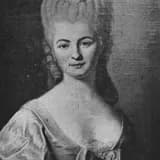
Halley’s Comet was observed at perihelion on 13 March 1759, confirming the calculations Lepaute helped produce.
On 13 March 1759, Halley’s Comet was observed at perihelion, confirming the broader prediction work in which Nicole-Reine Lepaute had participated. The observed return represented a spectacular validation of the mathematical methods developed by Clairaut, Lalande, and Lepaute, and it helped secure the prestige of modern celestial mechanics.
The date is important not because Lepaute personally observed the comet, but because the event verified the calculations to which she had contributed. In the mid-eighteenth century, predicting a comet’s return with accuracy was a major scientific challenge. The result demonstrated the practical power of theoretical astronomy and the value of extensive collaborative computation. Lepaute’s participation matters because the success depended on a large body of numerical work that was often invisible in later retellings.
For a woman in eighteenth-century France, contributing to such a celebrated scientific result was a notable barrier-breaking achievement. Although institutions rarely granted women equal status, Lepaute’s work became part of one of the best-known successes in the history of astronomy. The comet’s confirmed return helped define her legacy as a scientist whose careful calculations supported a transformative demonstration of the laws of gravitation.