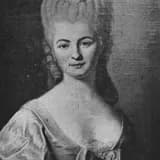
She married royal clockmaker Jean-André Lepaute on 27 August 1748, beginning a partnership that supported her later astronomical work.
On 27 August 1748, Nicole-Reine Lepaute married the clockmaker Jean-André Lepaute. This marriage linked her life to one of the most technically sophisticated artisan trades of the eighteenth century, a world in which mathematics, mechanics, and exact measurement were closely connected.
The marriage mattered historically because it helped create the practical setting in which Lepaute’s astronomical work could flourish. Jean-André Lepaute became a royal clockmaker, and the household and workshop environment gave Nicole-Reine access to scientific instruments, mathematical problems, and a network of elite scholars. Although women in this period were rarely acknowledged as formal scientific practitioners, Lepaute’s later role in astronomy depended partly on the technical culture of horology, where precision calculation was essential.
This event also highlights the gender barriers of her era. Marriage often narrowed women’s public identity, but in Lepaute’s case it opened a space in which her skill could be used in scientific labor. Later sources show that she contributed calculations for astronomical tables, comet predictions, and eclipse work, often in collaboration with male astronomers. Her marriage therefore formed not only a personal milestone but also a turning point in the emergence of one of the eighteenth century’s most important women scientific calculators.