← All women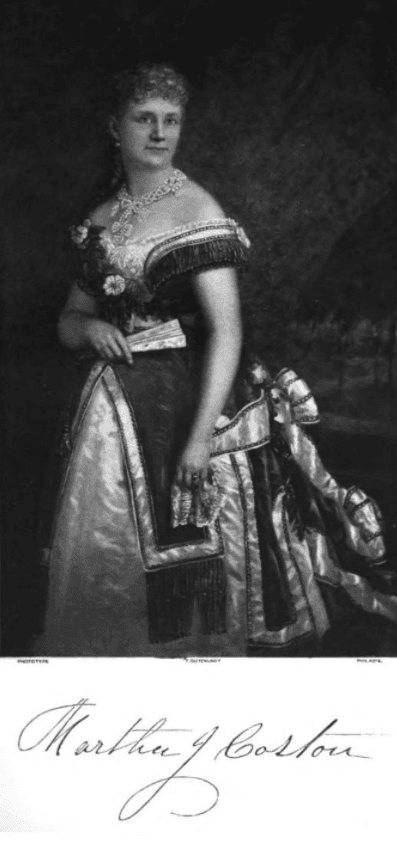
American · Science
Martha Coston
December 12, 1826 – July 9, 1904
Early Life and Background
Martha Jane Hunt, later known as Martha Jane Coston, was born on 12 December 1826 in Baltimore, Maryland.[1][2][6][10] Little detailed documentation survives about her parents, childhood household, or formal schooling, but the trajectory of her later life suggests that she grew up with limited access to advanced education, as was typical for girls in the early nineteenth‑century United States.[1][5][10] Despite this, she developed the practical intelligence, business acumen, and technical curiosity that would eventually make her one of the most consequential women inventors in maritime history.
During Martha’s youth, the United States was rapidly expanding its commercial and naval presence. Baltimore was a major port city, exposed to the risks of shipwrecks, storms, and wartime operations.[1][10] This maritime environment formed the backdrop to the technology she would later create: a reliable system for communicating at sea after dark. Growing up in a society that legally subordinated married women under the doctrine of coverture, she would face systemic barriers to independent economic and intellectual recognition, especially in fields like engineering and chemistry.[5][10]
Marriage, Family, and Formative Influences
As a young woman, Martha married Benjamin Franklin Coston, a naval scientist and inventor employed at the Washington Navy Yard.[1][5][10][12] Benjamin worked on a range of technical projects and had begun exploring the possibility of a color‑coded system of pyrotechnic signals for nighttime naval communication.[5][10][12] His notebooks and preliminary diagrams would later become the conceptual starting point for Martha’s own work.
Martha and Benjamin had several children; most sources consistently note that she was left a widow responsible for four surviving children when Benjamin died.[5][10][12] Benjamin’s death was attributed to exposure to hazardous chemicals in the course of his experimental work, a grim reminder of the risks associated with nineteenth‑century industrial and military research.[5][10][12] Widowed at around 21 years of age, Martha faced the dual pressures of grief and economic survival. She returned to Philadelphia, bringing with her her late husband’s papers and the responsibility of supporting her family.[5][10][12]
In those notebooks, she found sketches of a pyrotechnic signaling system that Benjamin had not succeeded in making practical.[5][10][12] Instead of merely preserving his papers as relics, Martha decided to pursue their potential, effectively turning her late husband’s unfinished idea into the seed for her own inventive career. This decision was a formative turning point: it demanded technical learning, coordination with chemists and pyrotechnicians, and persistence in the face of legal and social barriers to women’s participation in science and engineering.[5][10][12]
Developing the Pyrotechnic Night Signal System
Throughout the late 1840s and 1850s, Martha Coston dedicated herself to converting the concept of color‑coded flares into a robust, usable system.[5][10][12] She needed flares that were bright enough to be seen over long distances, durable in severe weather, and capable of burning in distinct colors—principally red, white, and green—that could be combined into a coded language.[5][10] These flares had to be safe to store and handle on ships and in coastal stations, yet powerful enough to be visible up to approximately 20 miles, as some accounts later noted.[10]
Lacking formal chemical training and constrained by gender norms, Coston adopted unconventional strategies. She hired and directed teams of chemists and pyrotechnicians, often corresponding under a male name or relying on male intermediaries to ensure that her ideas were taken seriously.[5][10][12] Over roughly a decade of experimentation, she applied knowledge from the booming fireworks industry to maritime signaling, seeking formulations that produced vivid, stable colors and reliable ignition.[5][10]
By the late 1850s, she had developed a functional system and sought legal protection. In 1858, an early patent and code system were recorded with her late husband listed as the inventor and Martha as the administrator, reflecting the patent office’s refusal to recognize women as inventors in their own right.[10][12] This administrative step preceded the final and more comprehensive U.S. patent that would define her contribution.
U.S. Patent No. 23,536 and Technical Significance
On 5 April 1859, the United States Patent Office granted Patent No. 23,536 for “Pyrotechnic Night Signals”.[2][5] The patent, formally issued in her capacity as administratrix of Benjamin Coston’s estate, legally described the core elements of her signaling system: flares composed to burn in distinct colors, and a code that used sequences and combinations of these flares to transmit information.[2][5][10] Although the document named her deceased husband as inventor, historical accounts and institutional biographies make clear that Martha herself had led the years of experimentation and commercialization that made the system viable.[5][10]
This patent was remarkable on several counts. First, in 1859 only a small number of patents were issued to women, and the vast majority concerned domestic tools or household technologies. Coston’s invention stood out as a complex, nondomestic system for military and maritime communication, placing it in a field typically dominated by male engineers and officers.[5][10] Second, the technology had immediate strategic value. The U.S. Navy quickly recognized its potential and began purchasing rights to the system, integrating it into naval operations on the eve of the American Civil War.[1][5][10]
Technically, the Coston system represented an early form of what might be described as "wireless" signaling: ships could communicate at night without physical lines, using light patterns instead of telegraph wires.[9] Martha’s code allowed ships to send numbers that corresponded to pre‑arranged messages, enabling tactical commands, warnings, and distress signals even in darkness and bad weather.[9][10] This innovation improved coordination among fleets and support vessels, reducing the risk of collision and enhancing rescue capabilities.
Business Career and the Coston Manufacturing Company
Recognizing that invention alone would not secure her family’s future, Martha Coston moved aggressively into manufacturing and sales. She established the Coston Manufacturing Company, building facilities to produce her patented flares at scale for naval and commercial customers.[1][5][10][12] As owner and manager, she oversaw production, quality control, and negotiations with government agencies—roles seldom occupied by women in mid‑nineteenth‑century industry.
In 1861, amid rising tensions that would explode into the Civil War, Coston received a major order from the U.S. Navy for large quantities of her flares.[10][12] The Navy adopted them for ship‑to‑ship and ship‑to‑shore communication, especially in nighttime operations where traditional signaling methods were inadequate. One of the most famous early uses occurred that year when the USS Sabine deployed Coston flares during the rescue of the troop transport Governor, which had been caught in a violent storm off South Carolina.[10][12] Historians report that more than 500 lives were saved in this operation, a dramatic demonstration of the system’s life‑saving capacity.[10][12]
Throughout the 1860s, Coston’s company supplied flares that were used extensively during the Civil War.[1][5][10] The signals improved fleet coordination and contributed to the Union’s tactical advantage in naval engagements, though they were not weapons in themselves. After the war, demand persisted. The United States Life‑Saving Service—a precursor to the modern U.S. Coast Guard—adopted Coston flares as standard safety equipment at its stations.[3][5][6][13] They were used to signal distressed vessels, guide rescue operations, and coordinate actions between shore crews and ships.
Martha expanded her market beyond U.S. borders, selling flares to navies, shipping firms, maritime insurance companies, and yacht clubs around the world.[5][6] She secured additional patents, including in European countries, for improved versions of the signals and for new ignition mechanisms such as a "twist‑ignition" device patented in 1871.[5] These later patents were filed in her own name, reflecting gradual erosion of the legal barriers that had prevented earlier recognition.
Major Works, Patents, and Technical Improvements
The centerpiece of Martha Coston’s technical legacy is the pyrotechnic night signal flare system first formalized in Patent No. 23,536.[2][5] Her work, however, extended well beyond that single document. Over her career she introduced multiple improvements, including changes to chemical formulations, packaging, and ignition mechanisms designed to enhance reliability, safety, and ease of use.[5][6]
Sources highlight that she filed later patents in the United States and abroad under her own name, securing protection for upgraded flare designs and accessories.[3][5][6][13] These patents broadened the range of applications and ensured that the Coston brand remained associated with high‑quality signaling products. Some patents addressed the color fidelity and brightness of the flares; others focused on mechanical features that allowed sailors and shore personnel to trigger the signals quickly even in harsh conditions.[5][6]
Beyond engineering, Coston’s most notable "major work" in print was her autobiography, A Signal Success (1886), in which she narrated the origin, development, and impact of her flare system.[1][10][12] The book provides detailed descriptions of her interactions with the Navy, the challenges of securing adequate payment for her inventions, and the emotional toll of repeated bereavement, including the loss of several of her children.[10][12] It also documents her perspective on gender discrimination, as she recounts being denied a patent in her own name and having to mask her identity in technical correspondence.
Awards, Honors, and Later Recognition
During her lifetime, Martha Coston’s most tangible "honors" were the contracts and adoptions of her system by major institutions: the U.S. Navy, the United States Life‑Saving Service, and various foreign navies and maritime organizations.[1][3][5][6] These adoptions signaled institutional recognition of the value of her technology, though they did not always translate into fair financial compensation or public credit.
Formal commemorative honors came much later. In 2006, more than a century after her death, Coston was inducted into the National Inventors Hall of Fame for her pyrotechnic signaling system.[3][5][7][11] The Hall’s profile emphasizes that her flares "gave the U.S. Navy a great advantage in communication during the Civil War" and "advanced boating safety worldwide".[7] Her induction placed her among a select group of women recognized as major inventors, highlighting both her individual achievements and the broader historical neglect of women’s technical contributions.
Educational organizations and museums have increasingly featured Coston in exhibits and articles about women in engineering and transportation history. The Lemelson‑MIT Program has profiled her as an example of inventive problem‑solving and entrepreneurial persistence.[5] The Henry Ford museum and its associated media properties have produced articles and social posts celebrating her story, often emphasizing that she worked as a widowed mother overcoming nineteenth‑century gender stereotypes.[10][12]
Personal Life and Challenges
Martha Coston’s personal life was marked by both family responsibilities and tragedy. Widowed in her early twenties by Benjamin’s death from chemical exposure, she bore primary responsibility for raising her four surviving children.[5][10][12] Some accounts note that she also endured the loss of multiple children over the course of her life, a common but devastating reality in the nineteenth century.[8][10]
Financial insecurity initially pushed her to turn to her husband’s unfinished work as a potential source of income. Yet Martha’s pursuit of the signaling system soon became more than mere survival; it transformed into a sustained inventive and entrepreneurial project. Her autobiography reveals that she often had to disguise her gender in correspondence with chemists and engineers, adopting male names or having male intermediaries sign letters to secure responses and respect.[10][12] She describes negotiating with government officials who were reluctant to pay what she regarded as fair value for her technology, reflecting a broader pattern of unequal treatment toward women and civilian contractors.
Despite these challenges, Martha maintained control of the Coston Manufacturing Company and continued to direct improvements to her products. She engaged in international business, navigating differing legal systems and patent regimes while raising a family and managing grief. Her life thus combined domestic responsibilities with industrial leadership at a time when expectations for middle‑class women rarely extended beyond the home.
Legacy and Historical Impact
Martha Coston’s most immediate legacy lies in maritime safety and naval communication. Her flare system provided a reliable method for transmitting messages at night, significantly reducing the risks of miscommunication, collision, and failed rescue operations.[1][5][6][9] During the Civil War, Coston flares allowed Union vessels to coordinate movements and signal distress or tactical messages in conditions where visual flags and verbal calls were useless.[1][5][10] The documented rescue of more than 500 people from the Governor in 1861 became an emblematic demonstration of the system’s value.[10][12]
Post‑war, the adoption of Coston flares by the United States Life‑Saving Service and other maritime agencies institutionalized her technology in peacetime rescue work.[3][5][6][13] For decades, the flares remained standard equipment at coastal stations and on ships, influencing the later development of modern distress flares and signaling devices. In this respect, Martha’s invention can be seen as a crucial step in the evolution of non‑wire communications, providing a practical "wireless" visual signaling system for maritime contexts.[9]
Her legacy also has substantial significance for women’s history and the history of technology. As a nineteenth‑century woman who secured patents, led a manufacturing company, and dealt directly with the U.S. Navy and foreign clients, Coston defied contemporary gender norms.[5][10] The fact that her initial patent had to be filed under her husband’s name illustrates the legal barriers she confronted; her later ability to secure patents under her own name demonstrates gradual, though incomplete, progress.[5][10][12]
Historians and educators now highlight her story to illustrate how women’s technical contributions have often been obscured or misattributed. The conflicting biographical data found in some reference works—including alternate birth and death dates and locations—underscores how even basic facts about women inventors can become muddled when their stories are not carefully preserved.[1][2][6][8] Cross‑language encyclopedias and institutional profiles, however, converge on the 1826–1904 dates and emphasize her Baltimore origins and her role as an American inventor and businesswoman.[1][2][6][7][10]
In engineering outreach, transportation history, and STEM education, Martha Coston is increasingly presented as a role model: a widowed mother who taught herself to navigate technical, legal, and business domains; an inventor whose work saved lives; and a woman who insisted on being recognized in print and, eventually, in institutional honors like the National Inventors Hall of Fame.[5][7][10][11]
Later Life and Death
In the later decades of her life, Martha Coston continued to refine her signaling system and manage her business operations. She filed additional patents and maintained international sales relationships, ensuring that Coston flares continued to be produced and used around the world.[3][5][6][13] As the nineteenth century progressed, rapid advances in telecommunications—such as the spread of telegraphy and, later, wireless radio—began to transform long‑distance communication. Yet visual signal flares remained crucial for maritime safety, especially in emergencies and for smaller vessels not equipped with advanced equipment.
Martha died on 9 July 1904, at the age of 77.[1][2][6][7] Cross‑language sources most commonly identify Philadelphia, Pennsylvania as the place of her death, though some later reference works have incorrectly reported alternative locations and dates.[1][2][6][8] By the time of her passing, she had seen her inventions adopted widely and her company firmly established as a supplier of maritime signaling devices.
Her death did not end the use of Coston flares; they continued in service well into the twentieth century, and their underlying principles informed the design of subsequent distress and signaling equipment.[5][6] Over time, as scholars and institutions revisited the history of maritime technology and women’s contributions to engineering, Martha Coston’s life and work were rediscovered and reinterpreted. The 2006 National Inventors Hall of Fame induction and ongoing educational profiles have helped secure her place in the historical record as a pioneering woman inventor whose work made the seas safer and expanded possibilities for women in technical fields.[5][7][10][11]
Dated achievements
5 indexed.
- Dec121826Science
Birth of Martha Jane Hunt (Martha Coston)
Birth of Martha Jane Hunt (later Martha Coston) in Baltimore, Maryland, marking the beginning of a future maritime-safety innovator.
View details Martha Coston – Biographical Profiles - Apr051859